
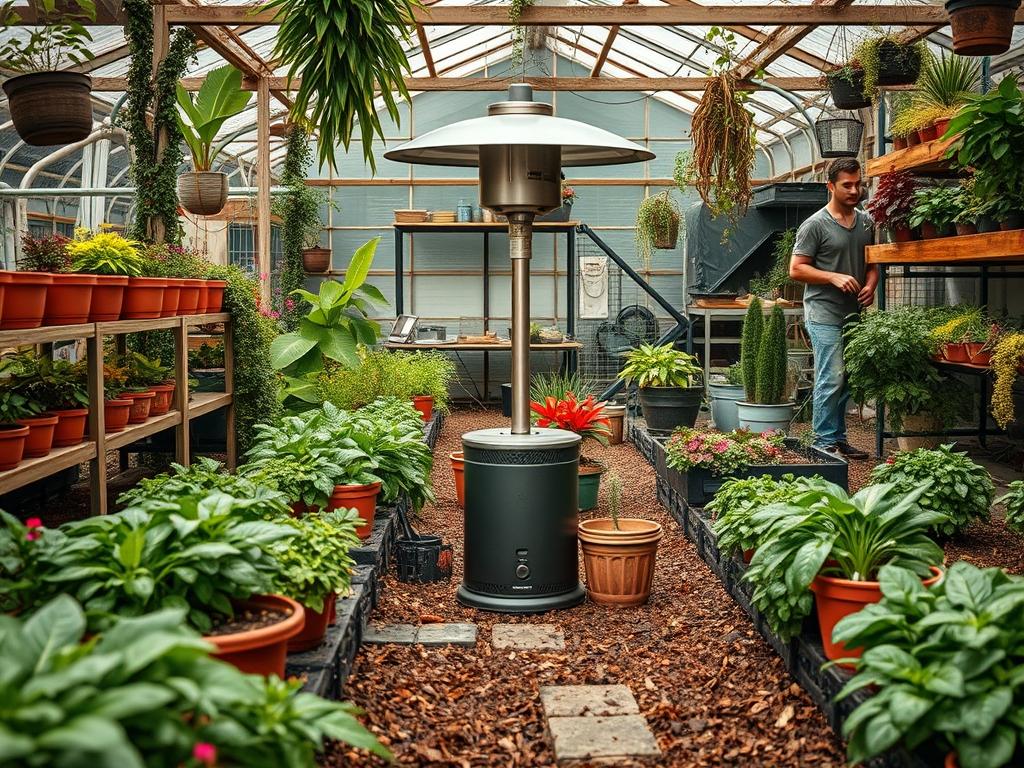
The successful integration of heating elements into a luxury landscape requires a deep understanding of how thermal comfort interacts with external aesthetics and site conditions. As the sun sets and the mercury drops, the functionality of a residential garden often vanishes without a strategic heating plan, turning a meticulously designed patio into a decorative but unused space. For a landscape architect, selecting the right fuel source is not merely a utility choice; it determines the permanence of the layout, the complexity of the hardscaping, and the long-term viability of the surrounding flora. Whether the goal is to enhance curb appeal or to create a year-round sanctuary for entertainment, the choice of fuel impacts everything from the depth of a utility trench to the required clearance for delicate deciduous trees.
Landscape Design Principles
Designing for heat requires a master plan grounded in symmetry and visual balance, where the heater serves as either a central focal point or a subtle, balanced element within a larger composition. Symmetry is often achieved by flanking an entryway or a seating group with twin radiant towers, creating a formal “frame” for the outdoor room. If the design utilizes fixed natural gas lines, these heaters become permanent anchors in the site plan. Therefore, they must align with the architectural axes of the home to ensure a cohesive transition from the interior to the exterior.
Elevation layers play a vital role in thermal efficiency. Because heat rises, a sunken patio or a garden room tiered with retaining walls creates a “heat pocket” that traps warmth more effectively than an exposed, flat deck. Integrating heaters into different elevation levels allows for a layered warmth profile, where infrared waves can reach users at varying heights. Furthermore, irrigation planning must account for these heat sources. High-intensity heaters can increase the evaporation rate of soil moisture within a 3 foot to 5 foot radius, meaning the adjacent planting beds may require dedicated drip emitters to compensate for the microclimate shifts.
Walkways and circulation paths must also remain unobstructed by heating hardware. In a propane-based system, the portability of the units introduces a variable that can clutter high-traffic zones. Conversely, electric or natural gas models are often recessed into the ceiling of a pergola or mounted on masonry pillars, maintaining clean lines and keeping the floor plane open. This structural integration ensures that the heating solution supports, rather than detracts from, the visual flow of the garden.
Plant and Material Selection
The following table provides a guide for plants that are resilient enough to thrive in the peripheral zones of a heated patio, where air temperatures may fluctuate and humidity levels are often lower.
| Plant Type | Sun Exposure | Soil Needs | Water Demand | Growth Speed | Maintenance Level |
| :— | :— | :— | :— | :— | :— |
| Boxwood | Partial to Full | Well-drained | Moderate | Slow | Medium |
| Lavender | Full Sun | Sandy/Gravelly | Low | Moderate | Low |
| Ornamental Grass| Full Sun | Adaptable | Low | Fast | Low |
| Dwarf Olive | Full Sun | Rocky/Dry | Low | Slow | Low |
| Russian Sage | Full Sun | Poor/Dry | Low | Fast | Low |
| Yucca | Full Sun | Sandy | Very Low | Slow | Low |
Implementation Strategy
The transition from a conceptual drawing to a functional, heated backyard begins with a rigorous site analysis. Before a single stone is laid, the landscape team must determine the grading requirements. For permanent natural gas heaters, a trench depth of 18 inches to 24 inches is typically required to house the fuel lines safely beneath the frost line. This utility work must be coordinated with the drainage plan to ensure that water runoff does not pool near the gas connections or electrical conduits.
Once the sub-grade infrastructure is in place, the hardscaping can proceed. If the design calls for a large, central fire feature powered by wood or pellets, the foundation must consist of a 4 inch reinforced concrete pad or a compacted 6 inch gravel base to support the significant weight. Edging is then utilized to define the boundaries between the scorched-earth zones near the heaters and the lush manicured turf beyond. To protect the root systems of nearby trees, use a mulch depth of at least 3 inches but ensure it is kept away from any open flame or high-intensity heating elements to prevent combustion risks.
For electric infrared systems, the implementation focuses on the overhead structure. These units are typically mounted to a load-bearing joist on a porch or gazebo. The wiring should be concealed within the architectural members to maintain a sleek, professional appearance. This stage requires a collaboration between the landscape architect and an electrician to ensure the total volt-amp load does not exceed the capacity of the home’s main panel, particularly if multiple high-wattage units are planned for a large outdoor kitchen.
Common Landscaping Failures
One of the most frequent mistakes in outdoor climate management is the failure to account for proper drainage around fixed heating assets. When a natural gas heater is installed on a pedestal, if the surrounding finish grade is not sloped at a minimum of 2 percent away from the base, water can infiltrate the internal mechanics, leading to corrosion and ignition failure. Furthermore, many homeowners ignore the issue of soil compaction. When heavy propane tanks and portable heaters are repeatedly moved over a lawn, the soil structure collapses, suffocating the roots of the fescue or bluegrass and creating unsightly bare patches.
Improper spacing is another critical failure point. Placing a 40,000 BTU heater too close to a Cedar or Pine tree can lead to needle desiccation or, in extreme cases, a fire hazard. There should be a minimum of 36 inches of clearance between the heater head and any combustible plant material or building eaves. Additionally, irrigation inefficiencies often arise when rotors are positioned such that they spray directly onto hot heater glass or metal components. The resulting thermal shock can crack the glass or accelerate the rusting of the heater shroud, necessitating expensive repairs.
Seasonal Maintenance
Landscape management is a year-round commitment that changes with the seasons as much as the heating needs do.
In the spring, the focus should be on inspecting all fuel lines for leaks that may have developed during the winter freeze-thaw cycles. Clear any debris, such as bird nests or spider webs, from the burner orifices. This is also the time to apply a fresh layer of organic mulch to the surrounding beds to help retain the moisture that will be lost once the heaters are into regular use.
During the summer, when heaters are used less frequently, provide a protective cover for the units to prevent UV damage and dust accumulation. For wood-burning setups, ensure the wood store is kept dry and ventilated. Monitor the irrigation system to ensure that plants in the “heat zone” are not showing signs of drought stress.
Autumn requires a proactive approach as the usage of patio heaters increases. Clean the reflectors and glass tubes to ensure maximum heat projection. This is the optimal time to prune back any seasonal growth that has encroached upon the heater’s safety clearance zone.
Winter maintenance involves the decommissioning of portable propane units if they will not be used in extreme cold. If they remain outdoors, the tanks should be disconnected and stored in a well-ventilated, shaded area. For permanent installations, ensure the pilot light is handled according to the manufacturer’s specifications for freezing temperatures and keep the base clear of snow and ice to prevent moisture-related damage to the internal valves.
Professional Landscaping FAQ
Which fuel source is the most cost-effective for large patios?
Natural gas is generally the most economical for large, permanent installations. While the initial trenching and plumbing costs are higher, the lower cost per BTU and the elimination of tank refills provide superior long-term value for extensive landscape projects.
Can I put a patio heater on a wooden deck?
Yes, but it requires specific precautions. Electric infrared heaters are the safest for wood surfaces. If using propane, a heat-resistant mat or a stable, non-combustible base is essential to protect the wood from heat transfer and potential tipping hazards.
How does wind affect my choice of heater fuel?
Wind significantly impacts convection heaters like propane or gas towers. In windy coastal areas, electric infrared heaters are superior because they heat objects directly rather than the air, ensuring the warmth is not blown away before it reaches the users.
Do I need a permit for a permanent gas heater?
In most jurisdictions, installing a permanent natural gas line for an outdoor heater requires a mechanical permit and an inspection by a certified professional. This ensure the line is buried at the correct depth and uses approved materials for safety.
How many heaters do I need for my garden?
A general rule of thumb is that one standard 40,000 BTU heater covers a circular area approximately 10 feet to 15 feet in diameter. For a professional layout, overlapping heat patterns ensure there are no cold spots in the seating area.