
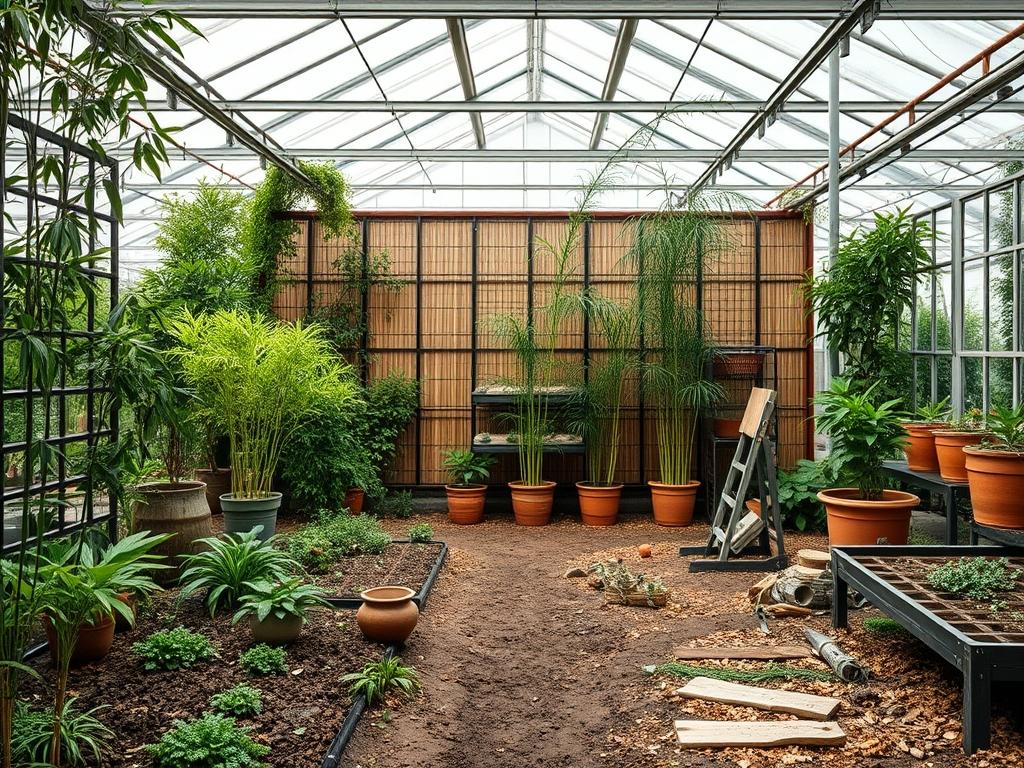
Privacy is often the most significant challenge in modern suburban landscape architecture. As property lots become more compact, the demand for effective vertical screening has surged. Homeowners frequently find themselves caught between the desire for open outdoor living and the reality of neighboring windows looking directly into their sanctuary. Traditional wooden fencing often feels claustrophobic or fails to meet local height ordinances. This is where Bamboo Privacy Screens offer a sophisticated, living solution. When planned correctly, these botanical installations do more than just block a view; they introduce texture, movement, and a sense of verticality that standard masonry or timber cannot replicate. From a consultant’s perspective, the goal is to integrate these screens so they enhance curb appeal while serving a rigorous functional purpose. Achieving this requires a deep understanding of species selection, site preparation, and the long term behavior of these giant grasses within a confined ecosystem.
Landscape Design Principles
Effective landscaping relies on the marriage of aesthetics and utility. When using Bamboo Privacy Screens, one must first consider the principle of visual balance. Because bamboo can grow rapidly to heights of 15 to 25 feet, it creates a powerful vertical statement. To prevent the landscape from feeling top-heavy, architects often utilize elevation layers. This involves planting lower-tier shrubs or perennials at the base of the bamboo to transition the eye from the ground level to the canopy. Japanese Forest Grass or Hostas serve as excellent underplanting options that thrive in the dappled shade provided by the taller culms.
Symmetry and focal points also play a critical role. A continuous wall of bamboo creates a formal, minimalist boundary, whereas staggered clusters can guide a visitor’s eye toward a specific backyard feature, such as a water fountain or a stone patio. If the goal is to screen a specific second-story balcony, the placement must be calculated based on the sightlines from that elevation, rather than just the ground level. Furthermore, the integration of walkways is essential. Leaving a 3-foot clearance between a bamboo screen and a path ensures that the arching culms do not obstruct foot traffic during rainy weather when the weight of the water causes the branches to dip.
Irrigation planning must be interwoven with the design from the outset. Bamboo is a thirsty plant, especially during its establishment phase. A dedicated drip irrigation system is often the most efficient way to deliver water directly to the root zone without promoting weed growth in the surrounding mulch. By grouping plants with similar water needs, a practice known as hydrozoning, you ensure that your privacy screen remains lush and green without overwatering the nearby drought-tolerant turf.
Plant and Material Selection
The following table outlines the most effective species and materials for creating a durable and attractive privacy barrier.
| Plant Type | Sun Exposure | Soil Needs | Water Demand | Growth Speed | Maintenance Level |
| :— | :— | :— | :— | :— | :— |
| Bambusa multiplex | Full Sun to Part Shade | Well-drained, Loamy | Moderate | Fast | Low (non-invasive) |
| Fargesia nitida | Partial Shade | Rich, Organic | High | Moderate | Low (clumping) |
| Phyllostachys aurea | Full Sun | Adaptable | Moderate | Very Fast | High (requires barrier) |
| Bambusa oldhamii | Full Sun | Fertile, Moist | High | Fast | Low (clumping) |
| Pseudosasa japonica | Shade to Sun | Moist, Acidic | Moderate | Fast | Medium (running) |
When choosing your bamboo, the primary distinction is between clumping and running varieties. Clumping species, like Bambusa multiplex, expand slowly from a central point and are much easier to manage in residential settings. Running species, such as Phyllostachys, spread via underground rhizomes and can become invasive if not contained by a professional-grade root barrier. In addition to the plants, your material list should include 3 inches of organic cedar mulch, high-density polyethylene (HDPE) barriers, and a 10-10-10 slow-release fertilizer.
Implementation Strategy
The successful installation of Bamboo Privacy Screens begins with site grading. You must ensure that the area where the bamboo is planted does not become a collection point for standing water. If the topography is naturally low, consider installing a French drain or creating a slight berm to elevate the root balls. Once the grade is established, the layout should be marked using landscaping spray paint or string lines to ensure straight, professional rows.
For running varieties, the most critical step is the installation of a 60-mil HDPE root barrier. This barrier should be placed at a depth of 22 inches, with roughly 2 inches of the material remaining above the soil line to prevent rhizomes from “jumping” over the top. The trench should be backfilled with a mix of native soil and organic compost to provide a nutrient-rich start.
When planting, space clumping bamboo roughly 3 to 5 feet apart to allow for a dense screen to form within two growing seasons. If you are looking for an immediate effect, closer spacing may be used, though this increases the eventual need for thinning. After the plants are in the ground, apply a thick layer of mulch. This helps retain moisture, regulates soil temperature, and suppresses invasive weeds. Finally, ensure that any hardscaping, such as retaining walls or pavers, is separated from the bamboo by an edging material to prevent the energetic root systems from heaving the stone.
Common Landscaping Failures
One of the most frequent mistakes in bamboo landscaping is the failure to account for drainage. While bamboo likes water, it cannot tolerate “wet feet” or anaerobic soil conditions. If the soil is heavy clay and remains saturated, the roots will rot, causing the leaves to turn yellow and drop. To fix this, soil amendments like perlite or coarse sand should be tilled into the planting site to improve porosity.
Another common failure is improper spacing and the subsequent overcrowding of the culms. When bamboo is planted too densely, the interior of the screen becomes a graveyard of dead branches due to a lack of sunlight and airflow. This not only looks unappealing but also creates a habitat for pests. Regular thinning, where you remove 30 percent of the oldest culms every year, is necessary to keep the screen vibrant.
Failure to install an adequate root barrier for running species is perhaps the most expensive mistake a homeowner can make. Without a 24-inch vertical barrier, running bamboo can travel under fences and damage neighbor’s lawns or even crack thin concrete walkways. Finally, many people underestimate the water requirements of bamboo in the heat of summer. Irrigation inefficiencies, such as using a sprinkler that loses most water to evaporation, will lead to leaf curl and a thin, transparent screen rather than a dense wall of privacy.
Seasonal Maintenance
Seasonal care ensures that your Bamboo Privacy Screens remain a permanent asset to the property. In the spring, focus on fertilization and thinning. As the new “shoots” emerge from the ground, this is the time to apply a nitrogen-rich fertilizer to support rapid growth. You should also prune away any culms that were damaged by winter frost to make room for new growth.
During the summer, the priority shifts to hydration. In periods of extreme heat, bamboo may require watering every other day. Watch for “leaf rolling,” which is the plant’s natural defense mechanism to reduce transpiration. If the leaves are tightly curled, the plant is under water stress.
In autumn, it is time to refresh the mulch layer. Adding another 2 to 3 inches of mulch will protect the root system from the upcoming cold. This is also the best time to check your root barriers for any stray rhizomes that might be trying to escape the designated planting area. Trim these back with a sharp spade or loppers.
Winter maintenance is minimal but involves protecting the plants from heavy snow loads. Tall bamboo culms can bend to the ground under the weight of wet snow. Use a pole to gently knock snow off the branches to prevent snapping. In colder climates, a late winter application of an anti-desiccant spray can help the evergreen leaves retain moisture when the ground is frozen and the roots cannot take up water.
Professional Landscaping FAQ
How fast will a bamboo screen provide total privacy?
Most tropical and temperate species will reach their full height within three to five years. However, when planted at 3-foot intervals, they typically provide a functional visual screen within two growing seasons as the canopy fills in.
Can I grow bamboo privacy screens in large pots?
Yes, bamboo thrives in large, well-drained containers. Ensure the pots are at least 20 inches wide and deep. You must water container-grown bamboo more frequently, as the limited soil volume dries out quickly in the summer heat.
Will bamboo attract pests or rodents to my backyard?
Bamboo itself is not a food source for most common garden pests. However, a dense, unmaintained screen can provide cover for rodents. Keep the base of the plants clear of debris and thin the culms to maintain visibility and airflow.
What is the best way to control running bamboo?
The only reliable method is a mechanical barrier. Use a 60-mil HDPE barrier buried 22 inches deep. Periodic “root pruning” around the perimeter with a sharp spade can also prevent the rhizomes from crossing into areas where they are unwanted.
Does bamboo require a lot of specialized fertilizer?
Bamboo is a grass and benefits most from high-nitrogen fertilizers. A standard 10-10-10 or 20-10-10 mix applied in early spring and mid-summer is sufficient. Organic options like composted manure also provide the necessary nutrients for deep green foliage.