
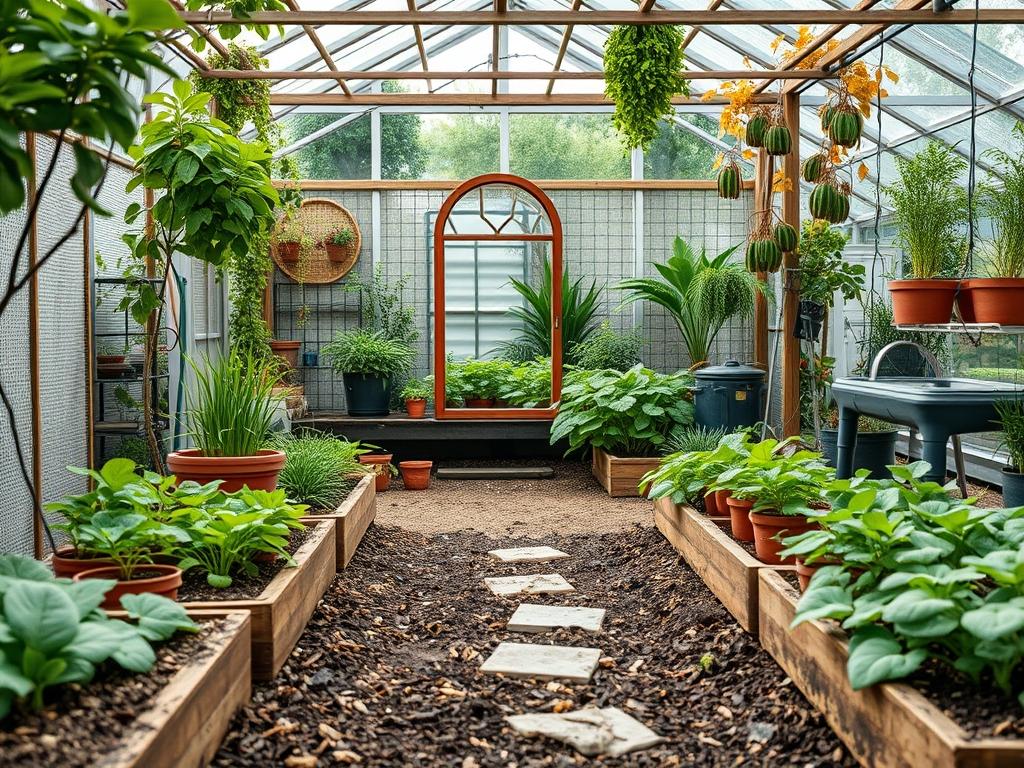
Creating a sense of expansive space within a confined outdoor perimeter is one of the most persistent hurdles in modern residential landscape architecture. In urban environments where square footage is at a premium, the transition from indoor living to the backyard often feels abrupt and restricted. Backyard Garden Mirrors serve as more than mere decorative elements; they function as structural tools that manipulate light, shadow, and perspective to break the visual boundaries of a property line. By treating a reflective surface as a “borrowed view,” a designer can bridge the gap between human-made hardscaping and the organic movement of the natural world. This strategy enhances curb appeal by adding a layer of sophisticated mystery, making a standard ten-foot setback appear as though it leads into a hidden woodland or an additional garden room. Beyond aesthetics, the functional goal is to bounce ambient light into “dead zones” where heavy shade from overhanging eaves or tall fences prevents successful photosynthesis in understory plantings.
Landscape Design Principles
To successfully integrate Backyard Garden Mirrors, a designer must adhere to strict principles of symmetry and visual balance. The mirror should never be placed as an afterthought; it must be treated as a window or a portal that requires a planned destination for the eye. Symmetry plays a major role here. If a mirror is positioned at the end of a Stone Paver walkway, the reflection should align perfectly with the path to create a seamless extension of the ground plane. This is often referred to as a “vanishing point” illusion, which is highly effective in narrow side-yards.
Focal points are equally critical. A mirror should ideally reflect a high-contrast element, such as a Sculptural Fountain or a specimen tree with interesting bark texture like a Paperbark Maple. If the mirror reflects a blank wall or a trash bin, it doubles the aesthetic failure of the space. Elevation layers also factor into the placement. By tilting the mirror slightly upward, you can capture the sky and canopy clouds, which lifts the visual weight of a small garden. Conversely, a slight downward tilt focuses the viewer on the intricate textures of Wood Chips or groundcover plants.
Irrigation and drainage must be considered during the planning phase. Reflective surfaces can create “hot spots” where concentrated light hits the soil, potentially increasing the evaporation rate. This requires a recalibration of the Drip Irrigation system to ensure that plants in the reflection zone do not suffer from thermal stress. Furthermore, the base of any large mirror installation must be integrated into the overall grading plan to prevent water from pooling at the frame’s foundation, which can lead to rot or glass silvering degradation over time.
Plant and Material Selection
The following table outlines the best plant choices to accompany Backyard Garden Mirrors, focusing on species that provide high-impact reflections and can tolerate the varied light conditions found near reflective surfaces.
| Plant Type | Sun Exposure | Soil Needs | Water Demand | Growth Speed | Maintenance Level |
| :— | :— | :— | :— | :— | :— |
| Japanese Forest Grass | Partial To Full Shade | Moist, Well-Drained | Moderate | Medium | Low |
| Hosta (White Variegated) | Shade | Rich, Organic | High | Medium | Low |
| Boxwood Globe | Full Sun to Shade | Neutral pH | Low | Slow | Moderate (Pruning) |
| Climbing Hydrangea | Shade | Moist, Loamy | Moderate | Fast | Moderate |
| Japanese Maple | Partial Sun | Acidic, Well-Drained | Moderate | Slow | High |
| Heuchera (Coral Bells) | Partial Shade | Well-Drained | Low | Medium | Low |
| Sword Fern | Full Shade | Humus-Rich | High | Medium | Very Low |
Implementation Strategy
The installation of Backyard Garden Mirrors requires a methodical approach to ensure both safety and longevity. The process begins with site grading. Before any mirrors are mounted, the ground must be leveled at the installation site to prevent shifting or leaning. If the mirror is to be free-standing, a sub-base of Crushed Limestone or Compactable Gravel should be laid at a depth of 4 inches to provide a stable foundation.
Step two involves the framing and moisture barrier. In an outdoor environment, moisture is the primary enemy of glass. Use backings made of Marine-Grade Plywood or Pressure-Treated Lumber to prevent warping. All edges of the mirror glass should be sealed with Neutral-Cure Silicone Sealant to prevent air and humidity from reaching the silvered backing. This prevents the “black edge” effect common in poorly installed outdoor mirrors.
For the layout, consider the mounting height. A mirror placed at ground level is most effective for extending walkways, while a mirror mounted at eye level (roughly 60 inches from the ground) works best as a “window” through a hedge or fence. Use a French Cleat system for mounting to wall surfaces; this allows for easy removal during extreme weather events and ensures the weight is distributed evenly across the Studs or Brickwork.
Finalizing the layout involves “softening” the edges. To make the mirror look like a natural opening rather than a piece of glass, plant English Ivy or Star Jasmine around the perimeter. Use Shredded Cedar Mulch at the base to suppress weeds and maintain a clean visual line where the reflection meets the earth.
Common Landscaping Failures
The most frequent mistake in backyard mirror placement is neglecting the “Burn Zone.” If a concave mirror is used, or even a flat one positioned toward the harsh afternoon sun, it can focus light into a beam that scorches foliage or, in extreme cases, ignites dry Pine Straw. Architects must calculate the sun’s trajectory across the seasons to ensure the reflection does not create a fire hazard or heat-stress the plant material.
Drainage neglect is another critical failure. If a mirror is installed against a retaining wall without proper Perforated Drain Pipe (French drains) behind it, hydrostatic pressure can build up. This pressure can cause the wall to bow, which will crack the glass or misalign the reflection. Furthermore, designers often fail to account for bird safety. Mirrors can be lethal to local bird populations if they reflect a clear flight path into a forest. To mitigate this, apply subtle UV-Reflective Decals or place a thin Steel Mesh or trellis in front of the glass to break up the reflection for wildlife while maintaining the illusion for humans.
Finally, lack of maintenance leads to soil splash-back. During heavy rains, soil can splash onto the bottom of the mirror, creating a muddy finish that ruins the depth illusion. This is easily solved by using a 12-inch Border of River Rock or Polished Pebbles immediately beneath the mirror to create a splash-guard.
Seasonal Maintenance
Seasonal care ensures the Backyard Garden Mirrors remain effective year-round. In the spring, the primary task is cleaning. Use a mixture of Distilled Water and White Vinegar to remove mineral deposits left by winter rain. Check the integrity of the Latex-based Caulking around the frame and re-apply if any gaps have appeared.
Summer maintenance focuses on the surrounding horticulture. As plants like Boxwoods or Climbing Hydrangeas grow, they may begin to obscure the mirror too much. Pruning is necessary to keep the edges “loose” but not overgrown. Ensure the Irrigation Emitters are not spraying directly onto the glass, as regular tap water will cause permanent calcium scaling.
In autumn, the accumulation of leaves can trap moisture against the mirror’s frame. Use a Leaf Blower or Stiff Brush to clear debris. This is also the time to check the tension of any Mechanical Fasteners or bolts, as wood frames may have expanded or contracted with the humidity.
Winter protocols depend on the climate. In regions with hard freezes, it is often advisable to cover the mirror with a Breathable Tarp or remove it entirely if it is not made of Tempered Safety Glass. Freezing water trapped behind the glass can expand and shatter the pane. If the mirror remains outdoors, ensure the Mulch Depth is maintained at 3 inches to insulate the base and prevent frost heave from tilting the installation.
Professional Landscaping FAQ
Can I use a standard indoor mirror for my backyard?
No, indoor mirrors lack the weatherproofing required for humidity and temperature shifts. The silvering will peel within months. Always specify Exterior-Rated Safety Glass or Acrylic Mirrors designed specifically for outdoor environments to ensure durability.
Will a garden mirror cause a fire in my yard?
While possible with concave mirrors, flat mirrors generally only create “hot spots” of reflected light. To prevent damage, avoid placing mirrors where they reflect direct, intensified midday sun onto dry organic debris or highly flammable materials.
How do I prevent birds from flying into the mirror?
Incorporate a Decorative Trellis, thin vertical slats, or Bird-Safe UV Film. These tools break up the visual continuity for birds while allowing the human eye to perceive the added depth and light in the landscape.
What is the best way to clean outdoor garden glass?
Avoid harsh chemicals that can drip into the soil. Use a solution of Vinegar and Water with a Microfiber Cloth. For stubborn sap or bird droppings, use a Plastic Scraper to avoid scratching the surface.
Where is the most effective location for a mirror?
The most effective placement is at the terminus of a visual axis, such as the end of a path or centered behind a Static Water Feature. This maximizes the illusion of depth and doubles the movement of the water.