
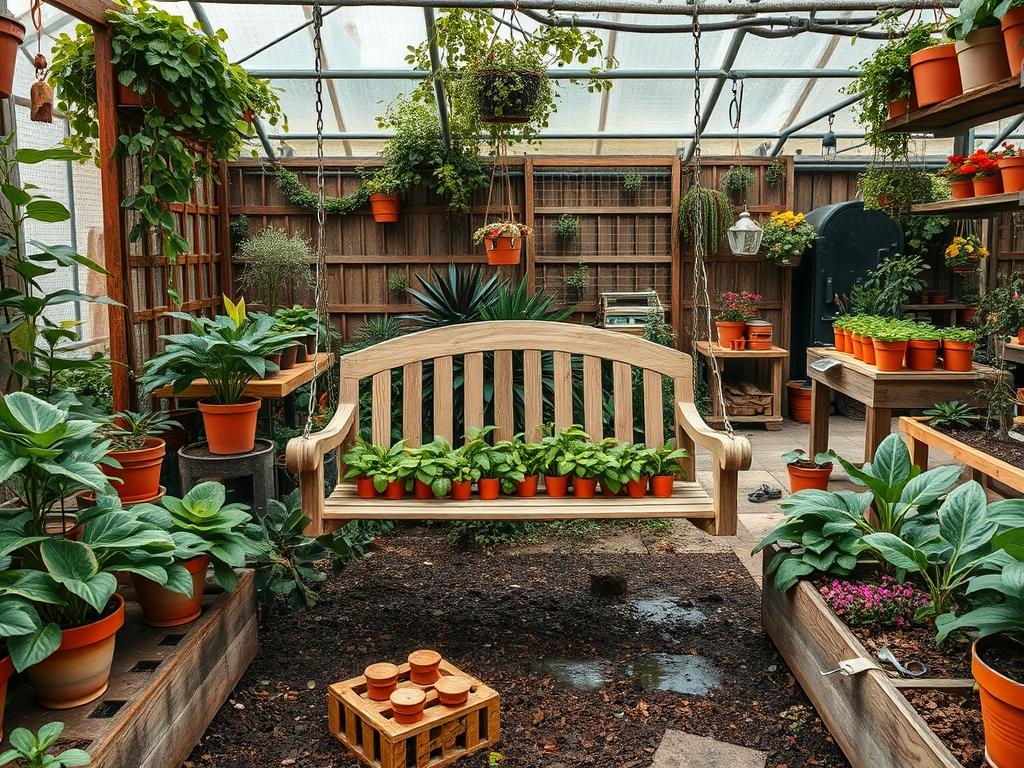
Designing a Backyard Hanging Bench Setup is more than an exercise in furniture placement. It is a structural intervention that requires a deep understanding of load bearing mechanics and aesthetic integration. The challenge lies in creating a suspended sanctuary that feels grounded in its environment despite its floating nature. Designers must account for local climate factors such as high winds or heavy rainfall, which influence the stability of the support structure and the longevity of the materials used. A well placed hanging bench enhances the overall value of a property by providing a sophisticated visual anchor. It transforms a transition space into a destination, offering a functional node where one can experience the landscape from a rhythmic, elevated perspective. Achieving this requires a rigorous approach to site analysis, where soil density, sun orientation, and existing vegetation are all measured against the desired outdoor functionality goals.
Landscape Design Principles
Successful integration of a hanging bench relies on the principle of symmetry and the establishment of clear focal points. When a bench is suspended, it naturally draws the eye. To balance this visual weight, designers often use flanking elements like Columnar Evergreens or Large Planters to frame the view. By creating a symmetrical border, the bench feels intentional rather than floating aimlessly in the yard. This balance extends to the horizontal plane as well. The area beneath the bench, often referred to as the shadow footprint, should be treated with the same care as the seating itself.
Elevation layers play a critical role in how the bench interacts with the rest of the garden. By using Retaining Walls or tiered garden beds, you can position a hanging bench so it overlooks a lower meadow or pond, enhancing the sensation of height. This verticality must be supported by proper irrigation planning. Groundcover plants situated under the bench will not receive direct rainfall, so a Drip Irrigation System is often necessary to prevent the soil from becoming hydrophobic.
Walkways serve as the circulatory system leading to the bench. Using Flagstone Pavers or Crushed Granite, a designer can create a path that dictates the pace at which a visitor approaches the seating area. If the bench is meant for quiet contemplation, the walkway might be winding and narrow. For a more social setup, a wide, linear path is appropriate. Visual balance is maintained by ensuring the scale of the support structure, whether it is a Custom Timber Pergola or a Steel A-Frame, matches the surrounding architectural features of the home.
Plant and Material Selection
The following table provides a selection of plants and materials suited for a high end hanging bench environment.
| Plant Type | Sun Exposure | Soil Needs | Water Demand | Growth Speed | Maintenance Level |
| :— | :— | :— | :— | :— | :— |
| Japanese Maple | Partial Shade | Well-drained | Moderate | Slow | Medium |
| Creeping Thyme | Full Sun | Sandy Loam | Low | Medium | Low |
| Boxwood Shrub | Full to Partial | Neutral pH | Moderate | Slow | High (Pruning) |
| Star Jasmine | Full to Partial | Rich/Moist | Moderate | Fast | Medium |
| Lavender | Full Sun | Gritty/Dry | Low | Medium | Low |
| Liriope | Sun to Shade | Adaptable | Low | Fast | Low |
For the construction of the bench and its support, the choice of material is of paramount importance. Western Red Cedar and Teak are the gold standards for outdoor woodworking due to their natural resistance to rot and insect infestation. If using metal supports, Powder Coated Steel or Galvanized Aircraft Cable should be specified to prevent oxidation. Stainless Steel Eye Bolts and Quick Links rated for at least 1,000 pounds ensure the safety of the users.
Implementation Strategy
The implementation of a Backyard Hanging Bench Setup begins with a professional site survey and grading. One must ensure the ground beneath the bench is level or has a slight 2 percent slope to redirect water away from the support footings. To begin, excavate holes for the support posts to a depth of at least 36 inches, or below the local frost line. Fill these with High Strength Concrete to provide a rigid foundation that can withstand the lateral forces of the swinging motion.
Once the footings are set, the hardscaping layer is applied. Install a layer of Geotextile Fabric to suppress weeds, then cover with 3 inches of Double Shredded Bark Mulch or Polished River Rock. This creates a permeable surface that prevents soil erosion. For the hanging mechanism, use Heavy Duty Chains or Marine Grade Rope depending on the desired aesthetic. Ensure the bench hangs at a height of 17 to 19 inches from the ground, which is the ergonomic standard for comfortable seating.
Drainage must be integrated into the layout. If the bench is located at the base of a slope, a French Drain should be installed behind the seating area to intercept subsurface water flow. Edging is the final step in the layout planning. Use Steel Landscape Edging or Belgium Block to create a crisp boundary between the mulch bed and the lawn. This prevents the turf from encroaching into the seating area and simplifies future maintenance.
Common Landscaping Failures
The most frequent failure in hanging bench installations is poor drainage, which leads to soil saturation around the support footings. When soil remains wet for extended periods, it loses its load bearing capacity, causing the structure to tilt or sink. Another common error is root overcrowding. Planting large trees too close to the bench supports can result in Tree Roots heaving the concrete footings or interfering with the level of the hardscaping.
Improper spacing is another significant issue. A hanging bench requires a clear Arc of Motion. If shrubs or decorative walls are placed too close to the front or back of the bench, they will be damaged by the bench’s movement. Designers must calculate a minimum of 3 feet of clearance in both directions. Soil compaction is often overlooked. During construction, heavy machinery can crush the soil structure, leading to poor plant growth and standing water. Finally, irrigation inefficiencies occur when spray heads are blocked by the bench itself, leaving the plants behind the structure parched while the bench frames are prematurely weathered by constant water contact.
Seasonal Maintenance
Landscape management for a suspended seating area changes with the seasons. In the spring, the primary focus is on structural integrity. Professionals should inspect all Hardware, checking for signs of metal fatigue or wood checking. Apply a fresh coat of UV Resistant Sealer to the timber elements to protect against the intensifying sun. This is also the time to refresh the Mulch to a depth of 2 to 3 inches to maintain moisture for the surrounding flora.
Summer maintenance involves strictly monitoring irrigation. Because the bench can act as an umbrella, the soil directly underneath remains dry even during light rain. Supplemental hand watering may be required for groundcovers like Creeping Thyme. In the autumn, the removal of leaf litter is essential. If damp leaves are allowed to accumulate in the crevices of the bench or around the base of the support posts, they promote fungal growth and wood rot.
Winter care is largely about protection from the elements. In regions with heavy snow, it is often wise to remove the bench from its chains and store it under a Waterproof Tarp or in a shed. This prevents the wood from undergoing excessive freeze and thaw cycles. If the bench remains outdoors, ensure that any Ice Accumulation is removed from the chains to prevent excess weight from stressing the overhead beams.
Professional Landscaping FAQ
What is the best material for a hanging bench?
Teak or Ipe are superior choices because they contain high natural oil content. These woods resist decay and maintain structural integrity for decades. For hardware, always use 316 Grade Stainless Steel to prevent rust streaks and mechanical failure.
How deep should the support posts go?
Support posts must be anchored at least 36 inches into the ground. In colder climates, they should extend below the frost line. This prevents Frost Heave from dewing the structure and ensures a stable, level swing for years.
Can I hang a bench from an existing tree?
Only if the tree is a mature hardwood with a branch diameter of at least 8 inches. Use Arborist Approved Straps instead of bolts to avoid girdling the tree. Consult a certified arborist to evaluate the tree health first.
What is the ideal ground cover under a bench?
Pea Gravel or Decomposed Granite are excellent because they provide a stable surface and do not decompose. If you prefer a green look, Creeping Wire Vine is durable enough to handle occasional foot traffic and shade from the bench.
How do I prevent the bench from swinging too far?
Install Rubber Bumpers or Limiter Chains to restrict the range of motion. This is vital if the bench is located near a Retaining Wall or Glass Windows. Maintaining a clear 3 foot safety zone is the best practice.