
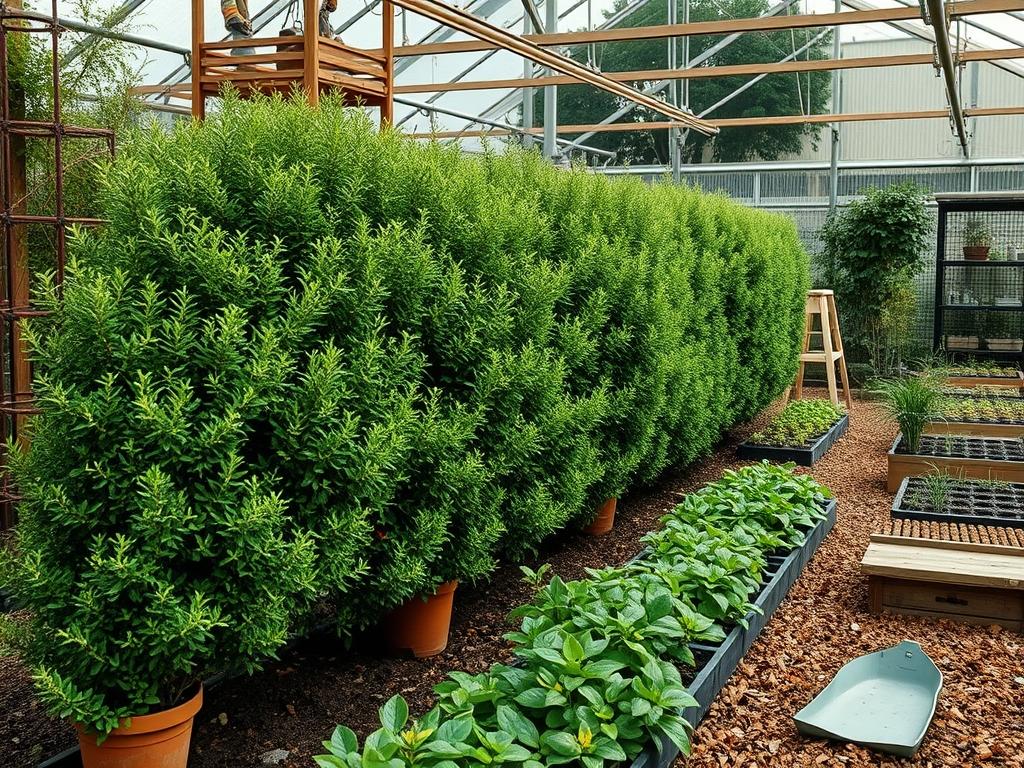
Establishing a sense of seclusion within a residential landscape requires a deliberate approach to both horticulture and architectural planning. When property owners seek an immediate solution for noise reduction and visual screening, few species offer the reliability of Privet. As a senior landscape consultant, I often see clients struggle with the transition between open, exposed yards and the intimate sanctuary they desire. The challenge lies not just in the choice of plant, but in the execution of the planting strategy to maximize growth rates while maintaining structural integrity. Effective Privet Privacy Hedge Growth is achieved through a synergy of soil preparation, precise spacing, and consistent hydrological management. By leveraging the fast growing nature of Ligustrum, we can transform a vulnerable perimeter into a lush, living wall that enhances curb appeal and provides a significant return on investment through increased property value and functional outdoor utility.
LANDSCAPE DESIGN PRINCIPLES
Incorporating a hedge into a professional landscape design requires more than simply lining up plants along a fence. We must consider the principles of symmetry and focal points to ensure the hedge complements the existing architecture. A privacy screen acts as the backbone of a garden; it provides a neutral, green backdrop that allows foreground ornamental plantings to pop. To achieve visual balance, the height of the Privet should be proportional to the depth of the property. For a narrow side yard, a neatly sheared 6 foot wall offers intimacy without swallowing the space. In larger estates, allowing the hedge to reach 10 to 12 feet creates a majestic, estate-like atmosphere.
Elevation layers are equally critical. We do not stop at the hedge. A professional design incorporates a tiered approach where the Privet serves as the tallest layer, followed by mid-sized shrubs and low-lying perennials or groundcovers. This layering masks the standard “leggy” appearance that older hedges can develop at the base. Furthermore, integration with hardscaping, such as walkways and retaining walls, must be planned before the first shovel hits the dirt. A hedge should follow the natural contours of the land or the hard lines of a flagstone path to create a sense of intentionality. Finally, irrigation planning is a non-negotiable design element. High speed growth is fueled by water; therefore, installing a drip irrigation system along the hedge line ensures that moisture reaches the root zone efficiently without wasting resources or promoting leaf fungus through overhead watering.
PLANT AND MATERIAL SELECTION
Selecting the right variety of Privet is the most significant factor in determining the eventual success of the privacy screen. The following table highlights the most effective species for rapid growth and durability in various North American climates.
| Plant Type | Sun Exposure | Soil Needs | Water Demand | Growth Speed | Maintenance Level |
| :— | :— | :— | :— | :— | :— |
| California Privet | Full Sun to Partial | Well-drained/Sandy | Moderate | 2-3 feet per year | High Pruning |
| Amur Privet | Full Sun | Adaptable/Hardy | Low to Medium | 2 feet per year | Moderate |
| Japanese Privet | Partial Shade | Loamy/Moist | Moderate | 1.5-2 feet per year | Low |
| European Privet | Full Sun/Partial | Any/Alkaline | Moderate | 2 feet per year | Moderate |
| Golden Privet | Full Sun | Rich/Well-drained | Moderate | 1 foot per year | High Color |
In addition to the plants themselves, the material selection for the planting site is paramount. We recommend high-grade organic compost, a slow-release 10-10-10 fertilizer, and at least 3 inches of hardwood mulch to regulate soil temperature and moisture.
IMPLEMENTATION STRATEGY
To maximize Privet Privacy Hedge Growth, the implementation phase must be handled with surgical precision. Start by grading the site to ensure that water does not pool at the base of the stems, which leads to root rot. We prefer the trench method over individual holes. Excavate a trench that is 24 inches wide and 18 inches deep. This loosened soil allows the young root balls to expand rapidly without fighting compacted earth. If the soil is heavy clay, incorporate gypsum or expanded shale to improve porosity.
Spacing is the variable that most homeowners get wrong. For a dense, impenetrable screen, space the plants 12 to 18 inches apart on center. If you are using larger, 5-gallon nursery stock, you may extend this to 24 inches. Once the plants are in the trench, backfill with a mix of native soil and organic matter. Firm the soil with your hands, not your feet, to avoid over-compaction. Immediately after planting, install a soaker hose or drip line directly over the root zones. The final step of implementation is the initial prune. It sounds counterintuitive, but cutting the plants back by one third of their height immediately after planting stimulates lateral branching. This prevents the hedge from becoming thin and wispy as it rushes toward the sky.
COMMON LANDSCAPING FAILURES
The most frequent failure in hedge establishment is improper drainage. Privet is hardy, but it will not tolerate “wet feet.” In areas with high water tables, we often install a French drain parallel to the hedge to divert excess moisture. Another common mistake is root overcrowding. While we want a tight screen, planting two rows of Privet too close together can lead to a lack of airflow, which invites powdery mildew and anthracnose.
Soil compaction is a silent killer in new construction landscapes. Heavy machinery often leaves the soil in a concrete-like state. Without mechanical aeration or deep tilling, even the most aggressive Privet will fail to thrive. Irrigation inefficiencies also rank high among failures. Many homeowners rely on lawn sprinklers to water their hedges. This is insufficient because the water often hits the foliage and evaporates before reaching the roots, or worse, stays on the leaves overnight and promotes fungal infections. Finally, the “V-shape” pruning mistake is a major aesthetic and biological failure. If the top of the hedge is wider than the bottom, the lower branches are shaded out and will eventually die, leaving a bare, skeletal base.
SEASONAL MAINTENANCE
A professional maintenance schedule is the difference between a ragged row of bushes and a crisp, architectural living wall. In the Spring, the focus is on fueling growth. Apply a balanced granular fertilizer before the first flush of new leaves. This is also the time for the “hard prune” if the hedge has lost its shape. Use bypass loppers for larger branches and gas-powered hedge trimmers for the perimeter.
During the Summer, maintenance shifts to water management and light shearing. Privet can handle the heat, but its growth will stall if the soil dries out completely. Monitor the drip system regularly. Perform light “tipping” every 4 to 6 weeks to encourage the hedge to fill in horizontally. As we move into Autumn, reduce nitrogen fertilization to allow the wood to harden before the first frost. Top up the mulch to a depth of 3 inches to protect the root system from the upcoming freeze. In Winter, maintenance is minimal. This is the “dormant season” where we perform structural repairs or remove any diseased wood. In regions with heavy snowfall, gently brush snow off the tops of the hedges to prevent the weight from splaying the branches outward and ruining the vertical symmetry.
PROFESSIONAL LANDSCAPING FAQ
How long does it take for a Privet hedge to become a full privacy screen?
With optimal Privet Privacy Hedge Growth conditions, including consistent irrigation and fertilization, a hedge planted from 3 gallon pots can form a solid, opaque screen within 3 years. Proper initial pruning is essential to ensure the base fills in completely.
Can I grow a Privet hedge in a shaded area?
While California Privet prefers full sun, the Japanese Privet (Ligustrum japonicum) is quite shade-tolerant. However, expect a slower growth rate and slightly less foliage density in shaded microclimates compared to those receiving at least 6 hours of direct sunlight.
What is the best way to prevent the hedge from becoming invasive?
Select sterile cultivars like Sunshine Privet if you are concerned about seed dispersal. For traditional varieties, regular shearing prevents the plant from flowering and setting seed, which effectively contains the plant within your desired landscape boundaries and prevents unwanted spreading.
How much water does a newly planted Privet hedge need?
Newly installed hedges require deep watering 2 to 3 times per week during the first growing season. Ensure the water reaches a depth of 12 inches. Once established, they are moderately drought-tolerant but thrive with weekly deep soakings during summer.
What tools are essential for maintaining a large Privet hedge?
You will need a high-quality power hedge trimmer for shaping, bypass loppers for thicker internal branches, and a hand pruner for detail work. A leveling string and tall stakes are also necessary to ensure the top remains perfectly horizontal.