
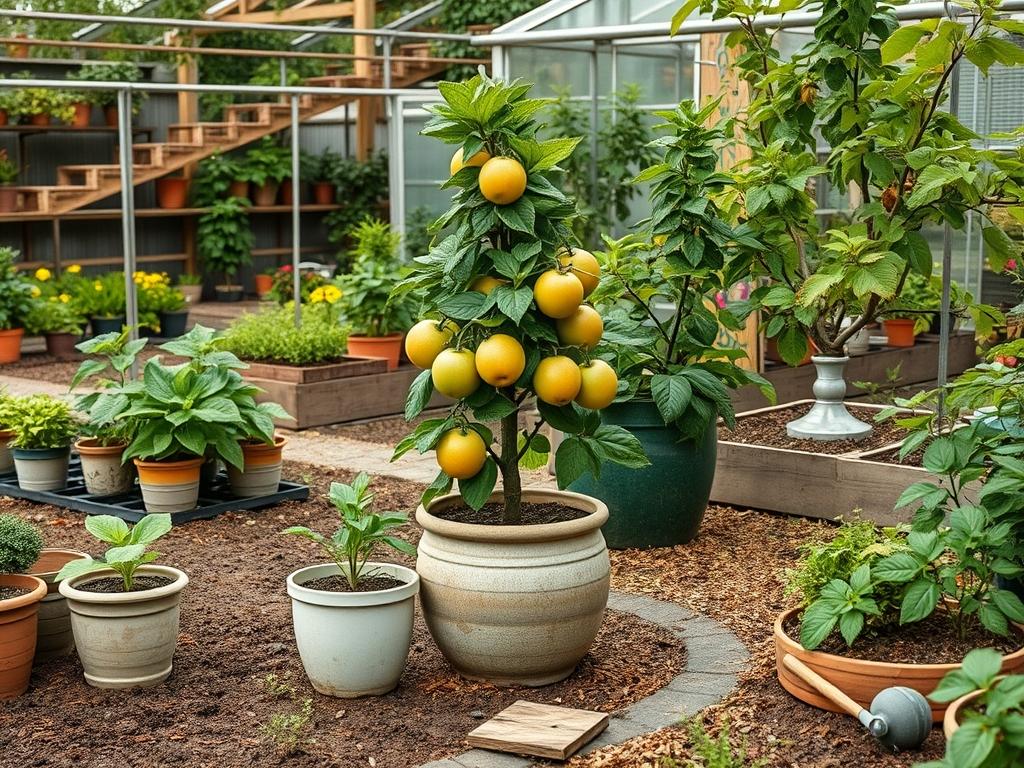
The urban landscape is moving away from the traditional separation of ornamental and edible gardens. Homeowners now demand a synthesis of form and function where every square foot of an outdoor environment contributes to both the aesthetic value and the household’s utility. Integrating Backyard Potted Fruit Trees into a modern landscape design allows for a level of flexibility that traditional in-ground planting cannot match. This approach addresses several significant architectural challenges: variable soil quality, limited southern exposure, and the need for seasonal mobility in temperate climates. By elevating fruit-bearing species into high-quality containers, we can manage microclimates with precision and ensure that every tree receives the exact hydraulic and nutritional support it requires for high-yield production.
Designing with containers is not merely a solution for small spaces; it is a sophisticated method of directing the eye and defining the movement of people through a landscape. A well-placed Meyer Lemon or a Columnar Apple serves as more than just a source of food. It functions as a living sculpture. From the perspective of curb appeal and property value, these architectural elements provide a sense of “productive luxury.” They suggest an outdoor space that is curated, intentional, and meticulously maintained. As we investigate the technical requirements of these systems, it becomes clear that the success of a container-based orchard relies on the careful balance of horticultural science and spatial engineering.
LANDSCAPE DESIGN PRINCIPLES
Success in modern container gardening starts with structural symmetry. In a professional landscape, Backyard Potted Fruit Trees are often used to flank entryways or terminate axial vistas. For example, a pair of Calamondin Orange trees in matching terracotta pots creates a sense of arrival. This formal arrangement provides immediate visual stability. When designing these zones, it is essential to consider focal points. A single, large Dwarf Mission Fig can act as a centerpiece for a seating area, offering a dense leaf texture that contrasts with the fine lines of ornamental grasses or hardscape materials like poured concrete.
Elevation layers are another critical component. By using pedestals, tiered decking, or retaining walls, a landscape architect can create a “stadium seating” effect for the orchard. This ensures that smaller trees in the foreground do not shade out larger specimens in the back. Visual balance is achieved by mixing different heights and leaf shapes. Complementing a rounded Bearss Lime with the vertical, narrow profile of a Scarlet Sentinel Columnar Apple prevents the design from feeling monotonous. Furthermore, walkways must be planned with a minimum width of 36 inches to allow for easy access with a garden cart or heavy-duty dolly, ensuring that the “working” aspect of the garden does not interfere with its beauty.
Irrigation planning is perhaps the most technical aspect of the design principle. Unlike in-ground trees, container-grown fruit trees have no access to deep communal groundwater. A professional layout integrates a hidden low-voltage irrigation system. Small polyethylene tubing lines can be routed along the back of pots or through subterranean conduits to ensure each tree receives a precise volume of water. This automation is crucial for high-yield results, as fruit development is highly sensitive to moisture stress.
PLANT AND MATERIAL SELECTION
Choosing the right species and the containers to house them is a decision-making process involving climate zones and maintenance durability. The following table outlines the most successful candidates for modern container-based orchards.
| Plant Type | Sun Exposure | Soil Needs | Water Demand | Growth Speed | Maintenance Level |
| :— | :— | :— | :— | :— | :— |
| Meyer Lemon | 8+ Hours | Sandy Loam / Acidic | High | Fast | Moderate |
| Columnar Apple | 6-8 Hours | Rich / Well-Drained | Moderate | Slow | Low |
| Dwarf Fig | 8+ Hours | Loamy / Neutral | Low to Moderate | Medium | Low |
| Calamondin Orange | 6-10 Hours | Well-Draining / Perlite | Moderate | Medium | Moderate |
| Dwarf Pomegranate | 8-10 Hours | Sandy / Lean | Low | Medium | Very Low |
| Dwarf Peach | 8 Hours | Rich / Compost-Heavy | High | Medium | High |
Material selection for the containers themselves is just as vital. Fiberglass planters are excellent for rooftop applications due to their light weight, while glazed ceramic provides the thermal mass necessary to protect roots from sudden temperature swings. For a more industrial or contemporary look, Corten steel or powder-coated aluminum containers offer longevity and a clean aesthetic.
IMPLEMENTATION STRATEGY
The installation of a container orchard must follow a logical sequence to ensure long-term health and structural integrity. The first step is grading. Even for a potted garden, the ground surface must be level to prevent pots from tipping and to ensure that water drains away from the base of the containers. If placing pots on a patio, verify that the pavers or stone slabs can handle the concentrated weight of a 20-gallon pot filled with wet soil, which can easily exceed 200 pounds.
Once the site is prepared, focus on the interior drainage of each container. Instead of the outdated practice of putting rocks in the bottom of the pot, use a geotextile fabric over the drainage hole to prevent soil loss while allowing water to pass. The soil itself should be a professional-grade potting mix containing perlite, vermiculite, and coconut coir. Avoid using native garden soil, as it will compact in a container and suffocate the roots.
When planting, ensure the root flare of the fruit tree is slightly above the soil line. Over-burying the trunk leads to rot. After planting, apply a 2-inch layer of organic mulch, such as shredded bark or chipped cedar, to the surface. This helps regulate soil temperature and moisture. To define the edges of the container area, use steel edging or cobblestone borders. This prevents turf or weeds from encroaching on the pots and provides a clean line for the string trimmer.
COMMON LANDSCAPING FAILURES
One of the most frequent errors in managing Backyard Potted Fruit Trees is poor drainage management. Many homeowners place pots directly on flat, non-porous surfaces. When the water exits the bottom of the container, it pools, creating a “perched water table” that keeps the bottom few inches of soil perpetually saturated. This leads to root rot (Phytophthora) and eventual tree death. Using pot feet or risers to lift the container just half an inch off the ground allows for proper air circulation and drainage.
Improper spacing is another common failure. While containers allow for high density, trees still need air circulation to prevent fungal diseases like powdery mildew. Crowding trees too closely creates a stagnant environment and makes it difficult to harvest the fruit. Similarly, many planners fail to account for “root circling.” In a pot, roots will eventually hit the wall and begin to grow in a tight spiral. If the tree is not removed and root-pruned every three to four years, it will become “pot-bound” and its yields will plummet. Finally, ignore soil compaction at your peril. Because pots are watered frequently, the soil particles settle into a dense mass over time. Using a hand cultivator to gently aerate the top 3 inches of soil annually is a professional requirement for maintaining high-yield trees.
SEASONAL MAINTENANCE
A professional-grade landscape requires a proactive maintenance schedule categorized by the four seasons.
Spring: This is the primary window for growth. Apply a slow-release fruit tree fertilizer (look for an N-P-K ratio like 6-2-4 or 10-10-10 depending on the species). Inspect irrigation emitters for clogs. Perform “tip pruning” on citrus to encourage bushier growth. As the weather warms, gradually move indoor-wintered trees back outside.
Summer: The focus shifts to water management and pest control. During heat waves, trees may require watering twice a day. Monitor for aphids, scale, and spider mites. Using an Integrated Pest Management (IPM) approach, apply neem oil or insecticidal soap at the first sign of infestation. Ensure the mulch depth is maintained at 2 inches to combat evaporation.
Autumn: Prepare the trees for the coming cold. Reduce nitrogen-heavy fertilization to avoid soft, new growth that could be damaged by frost. For deciduous trees like apples and figs, allow them to enter dormancy naturally. Clear away fallen fruit and leaves from the base of the pots to prevent harboring over-wintering pests.
Winter: For evergreen citrus in cold climates, move pots to a greenhouse or a bright indoor location. For hardy trees staying outside, wrap the pots in burlap or bubble wrap to insulate the roots from the freeze-thaw cycle. Use dormant oil sprays on deciduous trees to kill overwintering insect eggs.
PROFESSIONAL LANDSCAPING FAQ
How do I prevent my heavy fruit trees from tipping in high winds?
Choose heavy, wide-based stone or concrete containers. For lighter pots, add a layer of washed river rock at the bottom for weight. Alternatively, use tension wires anchored to the ground or a permanent trellis system for structural support.
Can I grow full-sized fruit trees in pots?
It is not recommended. For a high-yield backyard, always select dwarf or semi-dwarf rootstocks. These are genetically programmed to stay small while producing standard-sized fruit. Full-sized trees will outgrow their containers and suffer from nutrient deficiencies and stunted production.
How often should I repot my fruit trees?
Most Backyard Potted Fruit Trees need repotting every three to five years. Signs include roots growing through drainage holes or water running straight through the pot without soaking in. When repotting, use a container only 2 inches wider than the current one.
Is tap water safe for long-term container fruit gardening?
Tap water often contains salts and minerals that can build up in container soil, causing leaf burn. To mitigate this, “leach” the pots once a month by watering heavily until water flows freely from the bottom for several minutes to flush out excess salts.
Do I need two trees for fruit production in a container orchard?
Many modern dwarf varieties are self-fertile, meaning they do not need a second tree for pollination. Examples include most Meyer Lemons, figs, and apricots. However, some apples and pears require a cross-pollinator to set fruit; always check the specific cultivar labels.