
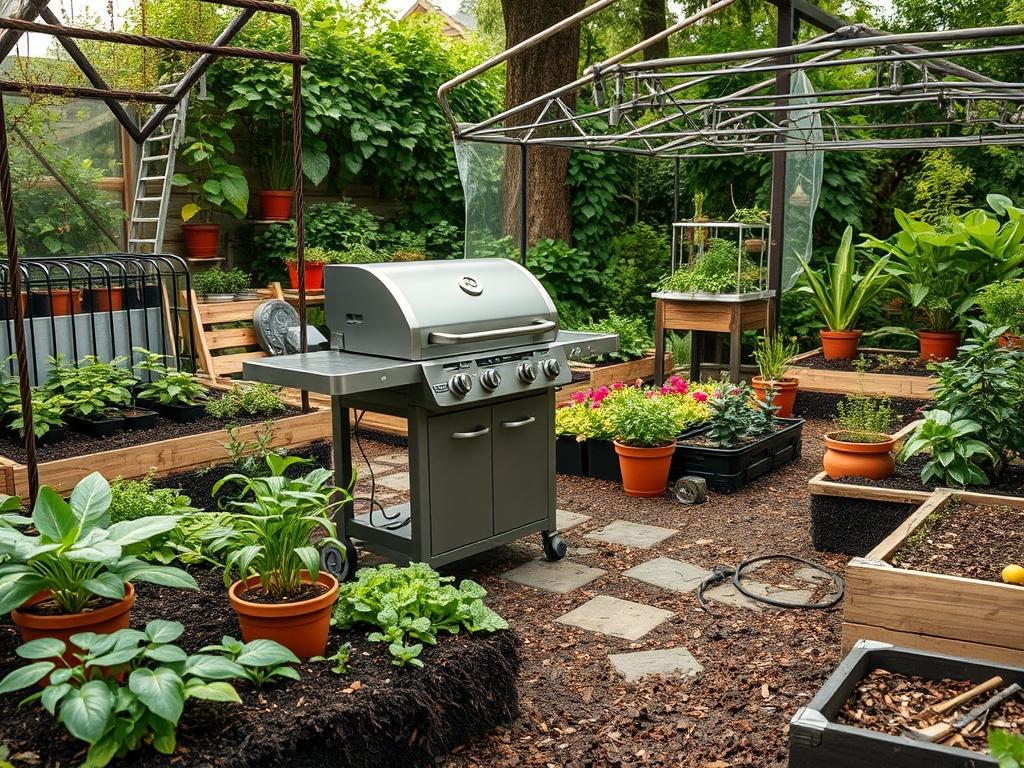
Creating a functional outdoor culinary space requires more than just placing a high-end appliance on a patio. It involves a holistic approach to environmental design where the grill station acts as a central hub within a broader ecosystem. The landscaping challenge lies in balancing the high temperatures and grease production of a cooking area with the delicate biological needs of a residential garden. Climate considerations play a pivotal role here, as prevailing winds can carry smoke toward the house or sensitive foliage, while excessive moisture from poorly graded turf can lead to premature corrosion of expensive stainless steel components. A well-executed plan enhances curb appeal by transforming a utilitarian cooking spot into a sophisticated focal point, ensuring that the transition from interior living spaces to the backyard is both seamless and intentional. When we view the outdoor kitchen through the lens of professional architecture, we prioritize the longevity of materials and the health of the surrounding flora, creating a space that functions perfectly for mid-summer hosting and remains resilient during the dormant winter months.
Landscape Design Principles
Professional landscaping around a grill station relies on the core principle of spatial hierarchy. Symmetry often dictates the layout, with the grill serving as the anchor of a visual axis that draws the eye across the yard. Designers achieve this by framing the cooking area with retaining walls or tall evergreen shrubs, creating a “room” without a ceiling. This sense of enclosure provides privacy and wind protection, which is essential for maintaining consistent temperatures during the cooking process.
Elevation layers add depth and functionality to the design. By using natural stone pavers or poured concrete at different heights, a landscape architect can separate the “active” cooking zone from the “passive” dining or lounging zones. This verticality also assists in managing drainage; a subtle 1 percent slope away from the grill prevents water from pooling around the base of the cabinetry. Walkways should be constructed from non-slip materials like flagstone or textured porcelain tiles, ensuring safe passage for the cook even when carrying heavy trays. Visual balance is maintained by mirroring heavy hardscape elements with softscape counterpoints, such as using ornamental grasses to soften the hard edges of a masonry island.
Irrigation planning is perhaps the most overlooked aspect of grill-centric landscape design. Water lines must be carefully routed to avoid conflicts with gas conduits or electrical runs. We typically recommend a dedicated drip irrigation system for the plants immediately surrounding the grill station. This prevents the frequent “overspray” from traditional oscillating sprinklers that can cause mineral deposits on metal surfaces and accelerate the rusting of internal grill components.
Plant and Material Selection
Selecting the right biological and geological components is critical for a low-maintenance, high-impact backyard. The plants surrounding a grill must be resilient enough to handle localized heat while requiring minimal debris cleanup.
| Plant Type | Sun Exposure | Soil Needs | Water Demand | Growth Speed | Maintenance Level |
| :— | :— | :— | :— | :— | :— |
| Rosemary | Full Sun | Well-drained | Low | Moderate | Low |
| Arborvitae | Full to Partial | Loamy/Moist | Moderate | Fast | Low |
| Blue Fescue | Full Sun | Sandy/Poor | Low | Moderate | Minimal |
| Japanese Maple| Partial Shade | Acidic/Rich | Moderate | Slow | Medium |
| Boxwood | Full to Partial | Neutral | Moderate | Slow | Moderate |
| Lavender | Full Sun | Gritty/Dry | Low | Moderate | Low |
For hardscaping, granite counter-tops are the industry standard due to their density and resistance to thermal shock. When selecting mulch, avoid flammable pine needles near the “heat zone” of the grill. Instead, utilize lava rock or river pebbles within a 36-inch radius of the fire source to mitigate fire risks and provide a clean, modern aesthetic.
Implementation Strategy
The successful execution of a backyard layout begins with a comprehensive site survey and the marking of utility lines. Grading is the first physical step; the terrain must be leveled using a bobcat or hand-grading tools to ensure the foundation for the grill island is perfectly flat. If the site has a significant slope, the installation of a timber or stone retaining wall is necessary to prevent soil erosion from undermining the structure.
Once the grade is established, we lay a base of compacted 3/4-inch crushed stone to a depth of at least 6 inches. This provides the structural integrity needed to support the weight of masonry and appliances. Edge restraints are then installed along the perimeter of the patio to prevent pavers from shifting over time. For the planting beds, we recommend a heavy-duty landscape fabric topped with premium hardwood mulch at a depth of 3 inches to suppress weeds and retain soil moisture.
Drainage is handled through a combination of surface sloping and underground perforated PVC pipes that carry runoff toward a designated rain garden or dry well. This prevents the grill station from becoming a muddy pond during heavy spring rains. Finally, the installation of low-voltage LED lighting along the walkways and within the grill area ensures the space remains functional and safe after sunset.
Common Landscaping Failures
The most frequent error in backyard design is the failure to account for drainage, which leads to stagnant water and eventual foundation settling. When water flows toward the house or the grill island rather than away, it creates a “bowl effect” that can rot wooden framing or buckle masonry. Another common mistake is root overcrowding. Planting a tree that has an aggressive root system too close to a patio will inevitably result in lifted bricks or cracked concrete slabs within five to ten years.
Improper spacing of privacy hedges often leads to poor air circulation, which can cause fungal growth on the plants and trap smoke in the cooking area. Soil compaction is another hidden killer; if the ground under the patio is not properly aerated before the base is laid, the lack of oxygen can kill the roots of neighboring large trees. Lastly, many homeowners fail to synchronize their irrigation timers with the actual needs of the site. Over-watering not only wastes resources but also creates a humid micro-climate that encourages the oxidation of metal grill parts.
Seasonal Maintenance
A professional landscape requires dedicated attention throughout the year to remain in peak condition. In the spring, the focus should be on refreshing the organic mulch and applying a pre-emergent herbicide to prevent weed seeds from germinating. This is also the ideal time to inspect the irrigation valves and ensure no lines were cracked by winter frosts.
Summer maintenance centers on water management and pruning. Any plants that have grown too close to the grill’s exhaust should be trimmed back to maintain a 24-inch clearance for safety. Ensure that the paver joints are clear of moss, which can hold moisture against the stones. As autumn arrives, leaf removal becomes the priority. Dead leaves are highly flammable and should be cleared from around the base of the grill daily to prevent fire hazards. Applying a winterizer fertilizer to the turf helps provide the nutrients needed for the root systems to survive the cold. Finally, during the winter, use breathable grill covers and avoid using salt-based de-icers on the surrounding masonry, as the chemicals can pit the stone and damage the soil chemistry for the following spring.
Professional Landscaping FAQ
How far should my grill be from my plants?
Maintain at least 24 to 36 inches of clearance between the grill and any foliage. This prevents heat damage to the plants and reduces the risk of accidental fires from stray sparks or grease flare-ups during cooking.
Will a grill ruin my wooden deck?
Direct heat and grease can damage wood over time. Use a heavy-duty grill mat or install a natural stone hearth beneath the unit. This protects the wood from stains, embers, and the constant friction of moving the grill.
What is the best ground cover for a cooking area?
Non-porous pavers or sealed concrete are ideal. These materials do not absorb grease as easily as wood or loose gravel. They are also much easier to power wash and maintain as part of your regular outdoor cleaning routine.
How do I prevent my pavers from shifting?
A solid foundation is key. Use at least 6 inches of compacted aggregate base and 1 inch of bedding sand. Ensure the perimeter is locked in with professional-grade edge restraints and polymeric sand in the joints.
Can I plant a vegetable garden near my grill?
Yes, this is highly functional for a chef. Planting culinary herbs like Rosemary or Sage in raised beds near the station provides easy access to fresh ingredients. Just ensure they are upwind from the primary smoke path.