
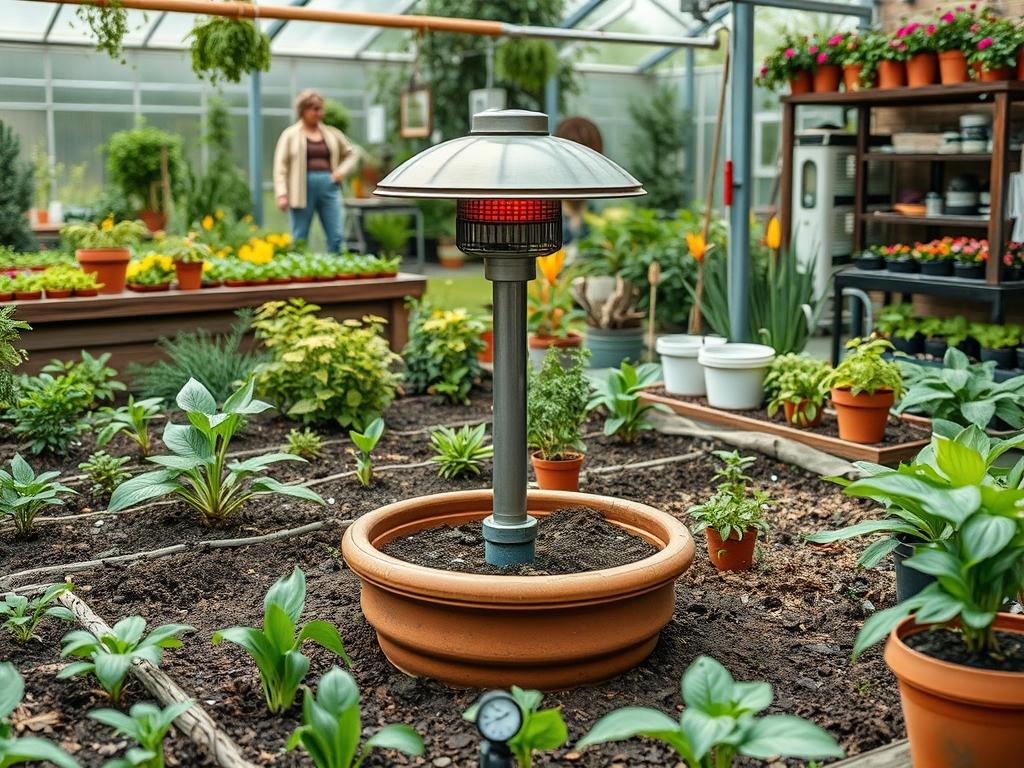
Effective landscape architecture serves a dual purpose: it must provide aesthetic value while sustaining the local ecosystem throughout the harshest conditions. As the mercury drops and the ground hardens, the traditional vibrance of a garden often retreats, leaving homeowners with a monochromatic palette. In these dormant months, a professional designer focuses on “kinetic interest,” which is the movement provided by wind, shadows, and, most importantly, wildlife. Integrating Backyard Bird Bath Heaters into a winter landscape ensures that your outdoor environment remains a living sanctuary even when the rest of the flora has entered senescence. Without a reliable heat source, standing water in stone or ceramic basins becomes a solid mass of ice, rendering the feature useless and potentially causing structural damage to expensive hardscape elements.
A strategic landscape plan considers how water features contribute to the overall site topography and microclimate. When we design for winter, we are essentially designing for survival and visibility. Water is a primary attractant that keeps the garden active. By utilizing a submersible de-icer or a heated bird bath, you prevent the expansion of ice that often lead to the cracking of cast stone or terracotta basins. This functionality extends beyond simple maintenance; it is about curb appeal. A steaming, liquid water source in the middle of a frozen garden acts as a visual magnet, drawing the eye to a specific focal point and providing a contrast to the surrounding snow or dormant mulch.
Landscape Design Principles
Successful garden planning relies on the principle of the focal point. During the summer, this might be a blooming hydrangea or a lush perennial border. In the winter, the focal point shifts to permanent structures. By installing Backyard Bird Bath Heaters, you maintain the utility of your hardscape features throughout the entire calendar year. Proper placement is essential. A bird bath should be situated at an elevation that allows for clear sightlines from the primary windows of the home. This creates a bridge between the indoor living space and the outdoor environment, a concept we refer to as interior-exterior fluidity.
Symmetry and balance also play critical roles in how these features are viewed. If you have a large, sprawling lawn, a single, isolated bird bath may look visually insignificant. We often recommend “layering” the feature within a cluster of evergreen shrubs or near a retaining wall to provide a sense of scale and protection for the birds. Elevation is another tool; placing the water source on a pedestal or an elevated grade prevents it from being buried by snowdrifts. Furthermore, the electrical requirements of Backyard Bird Bath Heaters mean that irrigation and electrical planning must happen concurrently. A professional layout includes underground conduits that house outdoor-rated extension cords or direct-bury cables to ensure a clean, seamless look without tripping hazards.
Plant and Material Selection
Integrating a heated water feature requires a surrounding landscape that provides cover and food for visiting wildlife. The goal is to create a “waystation” where the heated water is the centerpiece. The materials used for the bath itself must be thermal-shock resistant. We typically recommend reinforced concrete, heavy-duty plastics, or metal basins when using high-wattage heaters.
| Plant Type | Sun Exposure | Soil Needs | Water Demand | Growth Speed | Maintenance Level |
| :— | :— | :— | :— | :— | :— |
| Ilex verticillata (Winterberry) | Full sun to partial shade | Acidic, moist | High | Moderate | Low |
| Cornus sericea (Red Osier Dogwood) | Full sun | Adaptable, wet | Moderate | Fast | Medium |
| Picea pungens (Colorado Blue Spruce) | Full sun | Well-drained | Low | Slow | Low |
| Buxus sempervirens (Boxwood) | Partial shade | Neutral, loamy | Moderate | Slow | High |
| Panicum virgatum (Switchgrass) | Full sun | Versatile | Low | Fast | Low |
| Juniperus virginiana (Eastern Red Cedar) | Full sun | Well-drained | Low | Moderate | Low |
The plants listed above are chosen for their winter resilience and their ability to frame a water feature. Winterberry provides a burst of red fruit that contrasts beautifully with a bird bath, while Switchgrass offers structural movement and cover for birds approaching the water.
Implementation Strategy
The installation of a winterized water feature begins with site grading. You must ensure the ground beneath the bird bath is perfectly level. Even a slight tilt can cause a Backyard Bird Bath Heater to become partially exposed, which often leads to the heating element burning out or the basin cracking due to uneven thermal expansion. Start by excavating a 12-inch square area, filling it with 3 inches of crushed stone or pea gravel for drainage, and then tamping it down to create a stable base.
Once the base is set, address the electrical path. If you are using a plug-in immersion heater, run the power cord through a flexible protective sleeve to prevent damage from rodents or lawn equipment. The connection should be made to a GFCI outlet to ensure safety in wet conditions. After the electrical is secured, place the basin and add the heater. We recommend using a thermoneutral de-icer that only activates when the temperature drops below 35 degrees Fahrenheit. This manages energy costs while preventing the water from becoming unnaturally warm. Finally, finish the area with a 3-inch layer of hardwood mulch to provide insulation for the soil and a professional, polished look.
Common Landscaping Failures
One of the most frequent mistakes in backyard planning is placing a bird bath in a low-lying area with poor drainage. During a thaw, these spots become muck pits, which can destabilize the pedestal and contaminate the water. Another failure involves “root overcrowding.” Homeowners often plant large trees too close to their water features. Over time, the roots can heave the base of the bird bath, or the falling leaves can clog the basin and overwhelm the Backyard Bird Bath Heater with organic debris, causing it to overheat.
Improper spacing is another concern. If the bird bath is placed too close to dense, low-growing brush, it creates a “predation trap” where cats can hide and ambush birds. A minimum of 5 to 10 feet of open space around the bath is recommended, providing birds with a clear line of sight. Lastly, many neglect the “thaw-and-freeze” cycle of the soil. If a bird bath is not properly anchored on a gravel sub-base, the “heaving” of the ground in winter will tilt the basin, causing the heated water to spill and create dangerous ice patches on nearby walkways or patios.
Seasonal Maintenance
Landscape management is an ongoing process that shifts with the seasons. In the spring, the Backyard Bird Bath Heaters should be removed, cleaned with a solution of nine parts water to one part white vinegar, and stored in a dry location. This is also the time to inspect the submersible cords for any signs of wear or brittleness. Summer maintenance focuses on hydration; water levels must be topped off daily to prevent the pump from running dry, though the heater is not needed during these months.
Autumn is the critical transition period. This is when you should clear away fallen debris from the basin and reinstall the heating unit before the first hard frost. Check the GFCI outlet to ensure it is functioning correctly and clear any overgrown vegetation that might interfere with the power supply. In the winter, your primary task is monitoring. Check the basin after heavy snowfalls to ensure the surface is clear and the heater is maintaining a small hole of open water. Even a small opening is enough to provide the necessary hydration for local bird populations.
Professional Landscaping FAQ
Why is a heater better than a completely new heated bath?
A submersible de-icer allows you to maintain your existing high-quality hardscape aesthetics. You can simply add the heating element to your current cast stone or ceramic basin without needing to replace the entire fixture for the winter season.
Are bird bath heaters safe for all basin materials?
Most modern Backyard Bird Bath Heaters are designed with built-in thermostats and guards. However, they are safest in stone, concrete, or resin. Very thin plastic or fragile glass basins may experience stress fractures if the heater is not properly shielded.
How much electricity do these heaters actually consume?
A standard 75-watt to 150-watt heater only runs when the temperature drops below freezing. Because they are thermostatically controlled, they are relatively energy-efficient, often costing only a few dollars per month during the peak of winter.
Where is the best place to position the heater?
The unit should be placed at the deepest part of the basin to ensure it remains fully submerged. This prevents the heating element from burning out and ensures that the maximum volume of water is kept above the freezing point.
Can I use an extension cord for my bird bath heater?
Yes, but it must be a heavy-duty, outdoor-rated extension cord. For long-term landscape health, we recommend burying the cord inside a PVC conduit to protect it from weather and garden maintenance tools like mowers or trimmers.