
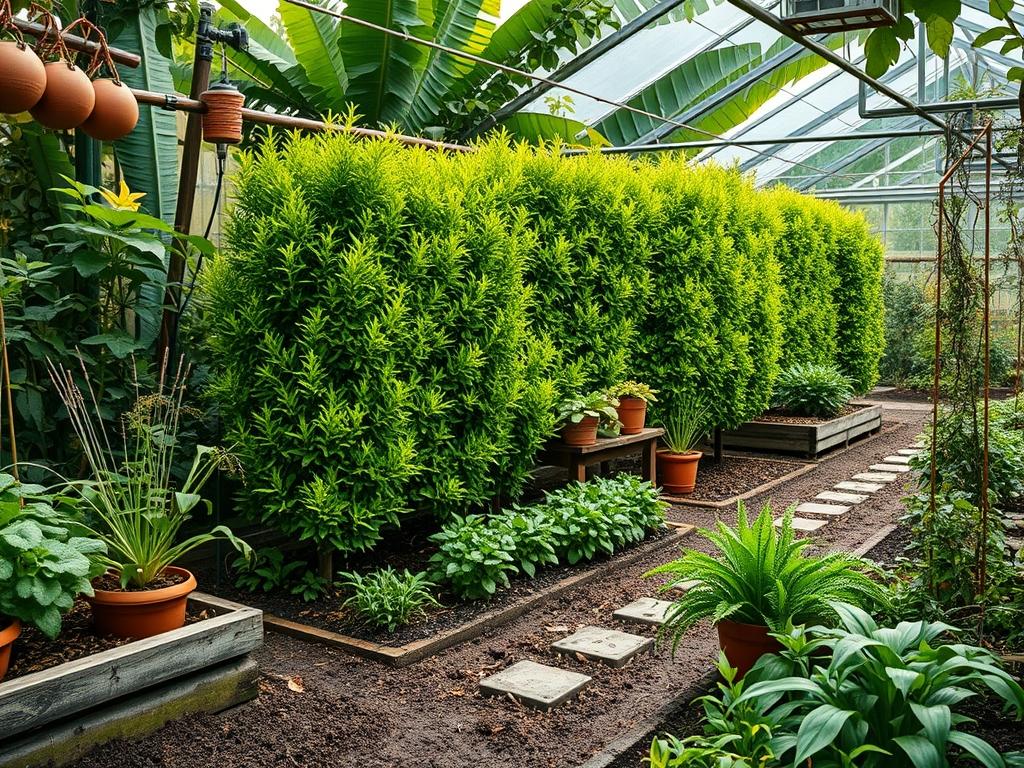
Creating a sense of enclosure within a residential landscape requires more than just a perimeter boundary; it demands a strategic layering of botanical elements that serve as functional architecture. For many homeowners, the challenge of reclaiming an outdoor living space from the sightlines of neighboring second-story windows or noisy thoroughfares involves a delicate balance of aesthetics and horticulture. Backyard Privacy Hedges act as a living vertical plane, providing a softer, more sustainable alternative to cold, industrial fencing. When planning these green envelopes, a designer must account for the local microclimate, available soil volume, and the ultimate mature height of the species selected. A well-designed hedge does more than just block a view; it serves as a windbreak, filters particulate matter from the air, and muffles ambient street noise, transforming a standard yard into a dedicated sanctuary. To achieve this, the consultant must prioritize curb appeal while maintaining a focus on long-term plant health and structural integrity.
Landscape Design Principles
Successful garden planning relies on the fundamental concepts of symmetry and visual balance. When installing tall hedges, it is essential to consider the vertical scale in relation to the primary residence. A massive, monolithic row of evergreens can overwhelm a small bungalow, whereas a thin, wispy screen will fail to provide the necessary psychological enclosure for a large estate. To create interest, architects often utilize elevation layers. This involves planting shorter ornamental shrubs or perennials in front of the primary hedge to soften the transition from the vertical wall to the horizontal lawn.
Focal points are equally critical. A break in a hedge line, perhaps accented by a stone archway or a piece of sculpture, draws the eye and prevents the landscape from feeling like a cage. Furthermore, the integration of walkways should feel organic. Pavers or crushed granite paths can be used to guide traffic alongside the hedge, allowing for maintenance access while creating an immersive garden experience. Behind the scenes, irrigation planning must be established before the first root ball is placed. Subsurface drip irrigation is the gold standard for hedges, as it delivers water directly to the root zone, minimizing evaporation and preventing the foliar diseases often caused by overhead sprinklers.
Plant and Material Selection
| Plant Type | Sun Exposure | Soil Needs | Water Demand | Growth Speed | Maintenance Level |
| :— | :— | :— | :— | :— | :— |
| Emerald Green Arborvitae | Full Sun | Well-drained | Moderate | Medium | Low |
| Leyland Cypress | Full Sun | Adaptable | High | Fast | High |
| English Laurel | Part Shade | Rich/Moist | Moderate | Fast | Moderate |
| European Hornbeam | Full/Part Sun | Loamy/Rich | Moderate | Slow/Medium | Moderate |
| Nellie R. Stevens Holly | Full/Part Sun | Acidic/Well-drained | Moderate | Medium | Low |
| Slender Weaver Bamboo | Full/Part Sun | Moist/Fertile | High | Very Fast | Moderate |
| Hicks Yew | Full Shade/Sun | Well-drained | Low/Moderate | Slow | Low |
| Green Giant Arborvitae | Full Sun | Adaptable | Moderate | Fast | Low |
| Japanese Privet | Full Sun/Part | Any | Low | Fast | High |
| Skyrocket Juniper | Full Sun | Dry/Well-drained | Low | Medium | Low |
Implementation Strategy
The process begins with a comprehensive site analysis. Use a transit level or a simple line level to check the grading of the area. Ground that slopes toward the house must be corrected to ensure drainage moves away from the foundation and the hedge line. Once the layout is marked with surveyor’s tape, the excavation phase involves digging a continuous trench rather than individual holes. This loosening of the soil encourages roots to spread laterally, which stabilizes the plants against high winds.
The depth of the trench should match the height of the root ball, but the width should be twice as wide. Before planting, test the pH levels of the soil. Most evergreens prefer a slightly acidic environment. If the soil is heavy clay, incorporate expanded shale or organic compost to improve porosity. After the plants are positioned, backfill with the native soil and tamp down lightly to remove air pockets. A layer of natural cedar mulch at a depth of 3 inches should be applied across the entire planting bed. This retains moisture and suppresses weeds, but care must be taken to keep the mulch away from the direct base of the trunk to prevent rot. Hardscaping elements, such as retaining walls or brick edging, can be installed at this stage to provide a clean finished look and prevent lawn grass from encroaching into the hedge roots.
Common Landscaping Failures
One of the most frequent mistakes in backyard privacy projects is improper spacing. Homeowners often plant young shrubs too close together to achieve an immediate screen, only to find that within five years, the plants are competing for light and nutrients. This results in the “self-pruning” of lower branches, leaving an unsightly gap at ground level. Crowded plants also suffer from poor air circulation, which invites fungal pathogens like Powdery Mildew.
Another critical failure is neglecting the drainage profile. If the site has high water retention or sits in a low spot, the roots will suffer from osmotic stress and eventually rot. Using French drains or perforated PVC pipe wrapped in geotextile fabric can mitigate these issues in heavy clay soils. Soil compaction is also a silent killer; heavy machinery used during home construction often leaves the subsoil as hard as concrete. If the bulk density of the soil is too high, roots cannot penetrate the earth, leading to stunted growth and instability. Finally, failing to install a dedicated irrigation controller often leads to inconsistent watering, which is the primary cause of plant death during the first two years of establishment.
Seasonal Maintenance
Seasonal care is what separates a professional landscape from an amateur garden. In the Spring, focus on fertilization and structural pruning. Apply a slow-release fertilizer with a balanced nitrogen-phosphorus-potassium ratio to support the new growth flush. This is also the time to inspect drip emitters for clogs and refresh the mulch layers.
During the Summer, the priority shifts to hydration management. During heatwaves, deep watering sessions should occur in the early morning to reduce stress. Keep an eye out for pests like spider mites or scale, which thrive in hot, dry conditions.
In the Autumn, stop heavy nitrogen fertilization to allow the new wood to harden off before the first frost. This is an excellent time to plant new additions to the hedge, as the cooler air and warm soil encourage root development without the stress of summer heat.
Winter maintenance involves protecting the plants from desiccation and physical damage. In colder climates, an application of anti-desiccant spray helps broadleaf evergreens like English Laurel retain moisture when the ground is frozen. If heavy snow is forecast, use burlap twine to lightly wrap upright species like Skyrocket Juniper to prevent the branches from splaying or breaking under the weight.
Professional Landscaping FAQ
How far apart should I space my privacy hedges?
Spacing depends on the species. For Green Giant Arborvitae, space trees 5 to 6 feet apart. Smaller shrubs like Boxwood require only 2 feet of clearance. Always calculate based on the mature width to prevent overcrowding and nutrient competition.
How do I fix poor drainage before planting?
Install a French drain or create a swale to redirect surface water. If the soil is heavy clay, planting on a slight mounded berm can keep the root crowns above the saturation zone, preventing root rot and fungal infections.
What is the fastest-growing hedge for immediate privacy?
The Leyland Cypress and Slender Weaver Bamboo are the fastest options, often growing 3 feet or more per year. However, high growth speeds require more frequent pruning and higher water consumption to maintain a tidy, professional appearance.
Can I grow a privacy hedge in full shade?
Yes. Hicks Yew and certain varieties of Holly perform exceptionally well in low-light conditions. While their growth rate may be slower than sun-loving species, they provide dense, dark-green foliage that maintains its color throughout the winter months.
Should I use landscape fabric under my hedge mulch?
Generally, skip the landscape fabric in permanent planting beds. It can restrict gas exchange in the soil and eventually becomes clogged with silt. A thick layer of organic mulch is more effective for long-term soil health and weed suppression.