
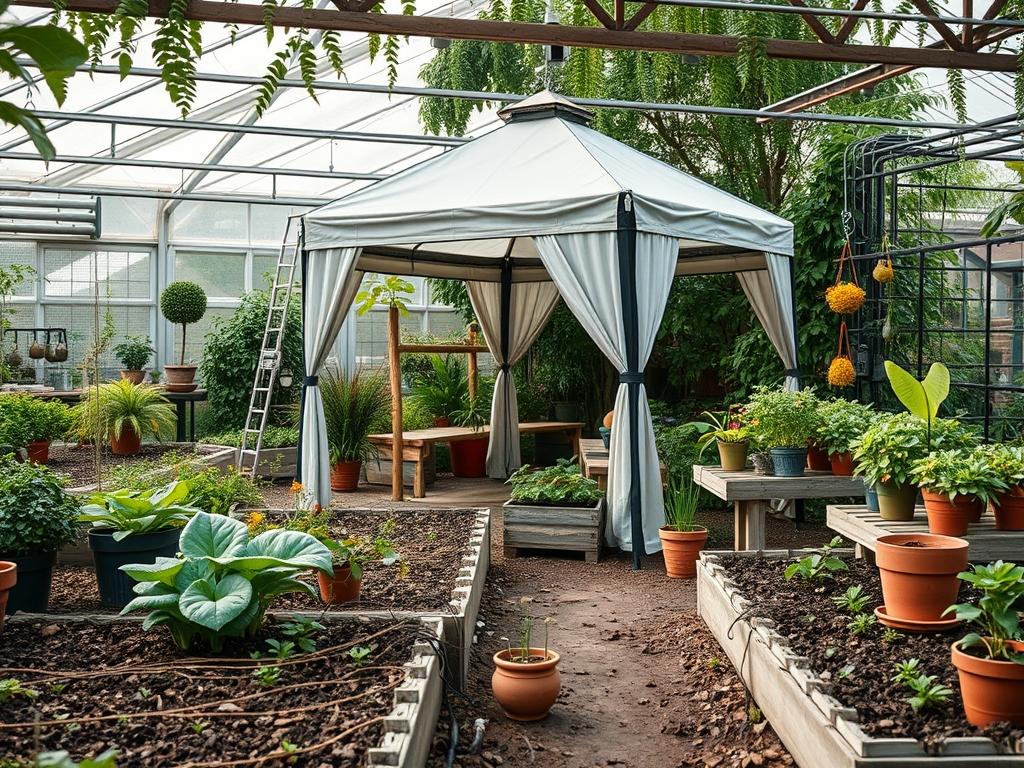
Creating a cohesive outdoor environment requires balancing temporary structures with permanent topographical features. Backyard Pop-Up Gazebos serve as essential elements for seasonal social engagement; however, they frequently present significant challenges during inclement weather. A garden must be more than just aesthetically pleasing; it must be resilient. Wind load is a primary concern for any lightweight structure. Without proper planning, a gust can transform a functional shade provider into a liability, potentially damaging both the fabric and the surrounding foliage. Integrating these gazebos into a landscape demands a strategic approach to anchoring, site selection, and windbreak utilization to ensure the space remains safe and inviting. By viewing the gazebo not just as a piece of furniture but as a temporary architectural installation, we can apply rigorous landscape design principles to mitigate risk while enhancing the overall beauty of the property.
Effective site selection begins with an analysis of the local microclimate and prevailing wind patterns. In many residential yards, “wind tunnels” are created by the narrow gaps between a house and a wooden fence or a line of tall trees. Positioning Backyard Pop-Up Gazebos in these high-velocity zones is a recipe for structural failure. Instead, architects look for natural depressions or areas shielded by established Evergreen Hedges. The goal is to reduce the “fetch,” which is the distance wind travels across open ground before hitting an object. By placing the gazebo near a Retaining Wall or a dense cluster of Ornamental Grasses, you can significantly lower the wind pressure exerted on the canopy. Curb appeal is also enhanced when the gazebo is integrated into the garden flow rather than appearing as a random addition in the center of a lawn.
Landscape Design Principles
Successful garden planning relies on the application of symmetry and focal points to create a sense of order. When placing Backyard Pop-Up Gazebos, consider them as the primary focal point of a “room” within the yard. By aligning the center of the gazebo with a dominant feature, such as a large Arborvitae or a central fountain, you establish a formal axis that feels intentional. Symmetry can be reinforced by flanking the entrance of the gazebo with matched Terracotta Pots or symmetrical rows of Boxwood. This creates a visual anchor that makes the structure feel more permanent and weighted.
Elevation layers are equally important. A gazebo should not simply sit on the grass. Elevating the structure slightly on a pad of Decomposed Granite or a raised Paver Patio provides a level surface that is critical for structural integrity. If the legs of the gazebo are at different heights due to uneven ground, the wind will catch the lopsided canopy more easily, leading to a torque effect that can snap the frame. Using Hardscaping to create a level “plinth” for the gazebo also aids in drainage, ensuring that after a storm, the area remains usable and mud-free.
Visual balance is achieved by surrounding the gazebo with plants of varying heights. Low-lying Groundcovers at the base transition into medium-height perennials, which then lead the eye toward the structure. This layering prevents the gazebo from looking top-heavy. Furthermore, planning for circulation is vital. Ensure that Walkways made of Flagstone or Crushed Gravel lead clearly to the gazebo entrance. This prevents soil compaction around the anchoring points, which is essential because loose, compacted soil provides very little “pull-out resistance” for Auger Stakes.
Plant and Material Selection
The following materials and plants are recommended for creating a wind-resistant and aesthetically pleasing environment for Backyard Pop-Up Gazebos.
| Plant Type | Sun Exposure | Soil Needs | Water Demand | Growth Speed | Maintenance Level |
| :— | :— | :— | :— | :— | :— |
| Switchgrass | Full Sun | Well-drained | Low | Fast | Low |
| Lavender | Full Sun | Sandy/Gravelly | Low | Moderate | Medium |
| Dwarf Alberta Spruce | Full to Partial | Loamy | Medium | Slow | Low |
| Creeping Thyme | Full Sun | Well-drained | Low | Moderate | Low |
| Japanese Yew | Partial to Shade | Rich/Moist | Medium | Slow | Medium |
| Blue Oat Grass | Full Sun | Dry/Lean | Low | Moderate | Low |
For hardware and anchoring, always specify high-quality materials. 12-inch Steel Spiral Anchors are superior to the flimsy pegs usually included with retail kits. For those placing gazebos on hard surfaces, 40-pound Sandbags or specialized Water-Filled Leg Weights are necessary to provide the required downwards force. Polypropylene Rope is a durable choice for guy lines, as it resists rot and UV degradation better than natural fibers.
Implementation Strategy
Planning the layout for Backyard Pop-Up Gazebos requires a step-by-step approach to ensure both aesthetic harmony and physical security. First, assess the grading of the site. A Laser Level or a simple String Level can help identify slopes. If the area has more than a 2-inch drop over a 10-foot span, the site should be leveled using Fill Dirt and topped with a layer of Landscape Fabric to prevent weed growth.
Once the site is level, install the edging. Steel Edging or Pressure-Treated 4×4 Lumber can define the gazebo’s footprint. Within this bordered area, apply a 3-inch layer of Mulch or Pea Gravel. This provides a clean surface that prevents splashing mud from staining the gazebo canopy. Before the gazebo is fully expanded, map out the anchoring points. For maximum wind resistance, ground stakes should be driven into the earth at a 45-degree angle pointing away from the gazebo. This uses the mechanical advantage of the soil to resist the lifting force of the wind.
If you are using guy lines, they should extend at least 3 feet out from the frame to create a wide, stable base. Avoid common mistakes like tying lines to a wooden fence or a light porch railing, as a strong wind can exert hundreds of pounds of force, potentially damaging the anchor object. Instead, use Heavy-Duty Ground Stakes or screw-in Earth Anchors. Once the structure is secure, it is time to focus on the “softscaping.” Plant the larger shrubs first to create a windbreak, then fill in with smaller perennials. This tiered planting approach creates a natural barrier that filters the wind, reducing its velocity before it reaches the gazebo.
Common Landscaping Failures
The most frequent failure in backyard planning is poor drainage. If water pools around the legs of Backyard Pop-Up Gazebos, the soil becomes saturated and loses its ability to hold stakes. This “liquefaction” of the soil allows anchors to pull out with minimal effort. To avoid this, ensure the area is graded to slope away from the gazebo at a rate of 1/4 inch per foot. If necessary, install a French Drain composed of Perforated Pipe and 3/4-inch Clean Stone to redirect runoff.
Root overcrowding is another issue. Many homeowners plant large trees too close to their gazebo site. Over time, the roots will lift the Pavers or Concrete Slabs, creating an uneven surface that compromises the gazebo’s stability. Observe the “mature spread” of any plant before putting it in the ground. Similarly, improper spacing of windbreak plants can lead to “vortex shedding.” If a row of trees is too dense, the wind might actually speed up as it is forced through small gaps, increasing the load on your structure. A staggered, semi-permeable row of Ornamental Grasses or Lattice Fencing is often more effective at diffusing wind than a solid wall.
Seasonal Maintenance
Landscape management changes with the calendar. In the spring, inspect the soil around anchoring points for frost heave. The expansion and contraction of frozen soil can push Auger Stakes out of the ground. Apply a fresh 2-inch layer of Mulch to retain moisture and keep the ground cool as temperatures rise. Check all Nylon Straps and Bungee Cords for signs of fraying.
During the summer, irrigation efficiency is the priority. Use Soaker Hoses or Drip Irrigation around the gazebo’s perimeter to ensure plants remain lush without over-wetting the structural base. Monitor for pest activity, as insects like wasps often find the frames of Backyard Pop-Up Gazebos attractive for nesting.
In autumn, clear fallen leaves from the top of the canopy immediately. Wet leaves add significant weight and can cause the fabric to sag, which leads to water pooling and eventual frame collapse. This is also the time to prune back any overhanging branches from Oak or Maple trees that could fall on the structure during a winter storm.
Winter management usually involves removing the fabric canopy of pop-up structures. Most Backyard Pop-Up Gazebos are not rated for snow loads. Leaving the metal frame up is generally acceptable if it is properly anchored, but the fabric should be cleaned, dried, and stored in a Plastic Storage Bin to prevent mold and rodent damage.
Professional Landscaping FAQ
What is the best way to anchor a gazebo on a deck?
Use Stainless Steel Lag Bolts to secure the gazebo legs directly into the wooden joists of the deck. Do not rely on the deck boards alone, as they may pull up under high tension during wind gusts.
How can I hide the ugly sandbags used for weights?
Place the 20-pound Sandbags inside decorative Wicker Baskets or large Planter Pots. This disguises the functional weight with an aesthetic element that blends into your garden design, maintaining a professional look.
Are native plants better for windbreaks?
Yes, Native Plants are often more resilient to local weather extremes and wind. Their deep root systems provide better soil stabilization, which helps maintain the integrity of the ground where you anchor your gazebo.
How much wind can Backyard Pop-Up Gazebos actually handle?
Most standard gazebos are rated for winds up to 25 miles per hour. With professional-grade Steel Stakes and properly tensioned Guy Lines, some high-end models can withstand gusts up to 35 miles per hour.
Should I use a permanent foundation for a pop-up gazebo?
While not strictly required, a level base of Compactable Gravel or Poured Concrete significantly improves stability. It prevents the legs from sinking into soft soil and provides a reliable surface for various heavy-duty anchoring systems.