
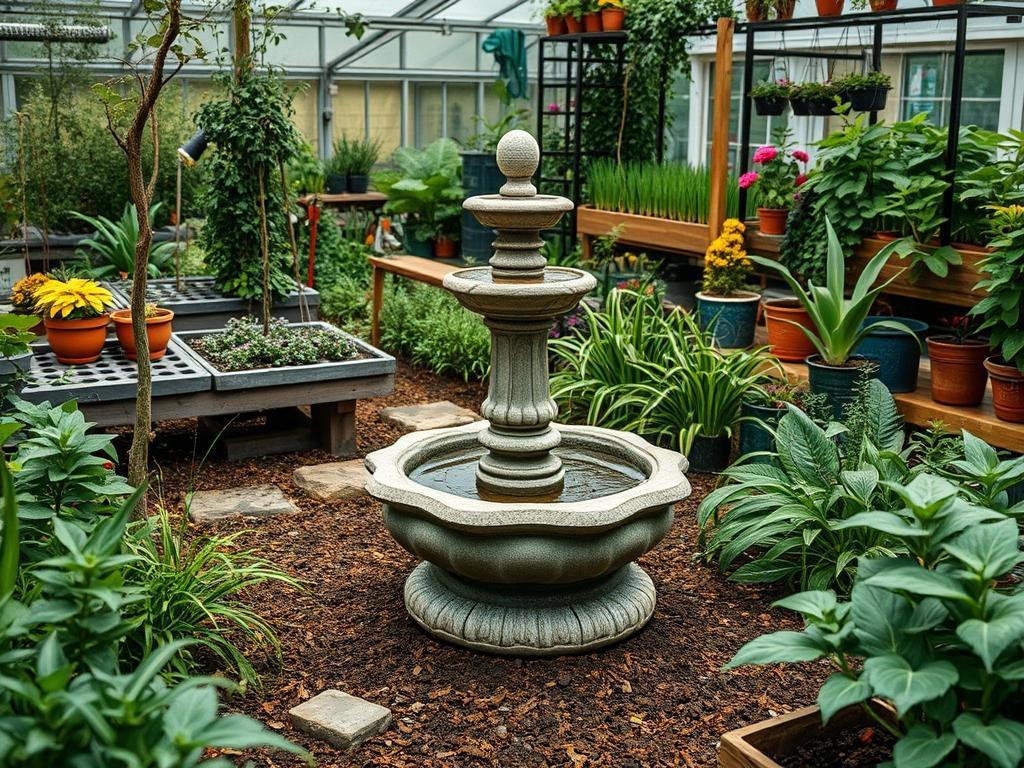
Creating a world class outdoor sanctuary requires more than simply placing a stone basin in a remote corner of the yard. It involves a sophisticated understanding of acoustics, site hydrology, and the psychological impact of moving water on the human nervous system. As modern living becomes increasingly digitized, the demand for backyard meditation fountains has surged. These features serve as functional anchors for psychological restoration. A well designed water feature mitigates urban noise pollution, establishes a clear focal point for the landscape, and increases property value through enhanced curb appeal. However, the success of such an installation depends on how well it integrates with the existing microclimate and topography. A fountain that is too small will be lost in a sprawling lawn; conversely, a feature with an aggressive splash pattern can saturate surrounding soil and damage the structural integrity of nearby retaining walls.
Landscape architects prioritize the sensory experience by considering how sound travels across different elevations. The goal of a meditation fountain is often to provide a consistent, low frequency burble rather than a loud, crashing splash. Achieving this requires a precise calculation of the drop height and the surface texture of the receiving basin. Furthermore, the placement of the fountain must account for wind patterns. High winds can carry fine mist away from the feature, leading to rapid water loss and potential damage to the submersible pump. By centering the design on these technical realities, homeowners can transform a standard garden into a high performance restorative environment.
Landscape Design Principles
Symmetry and visual balance dictate how a meditation fountain interacts with the observer. In a formal Japanese Zen garden, the fountain often occupies a central axis, creating a sense of order and permanence. In more naturalistic or English cottage styles, the fountain might be tucked away at the end of a winding flagstone path, acting as a reward for exploration. Professionals use elevation layers to create depth. For instance, placing a fountain on a slightly raised plinth of cut limestone draws the eye upward and separates the water feature from the lower ground cover. This subtle change in grade emphasizes the importance of the feature within the spatial hierarchy of the backyard.
Walkways should be designed to lead the viewer toward the fountain without creating a direct, jarring approach. Curved paths made of decomposed granite or river rock slow the pace of movement, encouraging a meditative mindset before the viewer even reaches the water. Irrigation planning is equally critical; even though the fountain is a closed system, the surrounding plant beds must be zoned separately to prevent overwatering. Choosing a focal point also means considering sightlines from within the home. A fountain positioned to be visible through a master bedroom window or a kitchen glass door extends the utility of the landscape into the interior living space, providing year round visual interest regardless of the weather.
Plant and Material Selection
The following table provides a selection of plants designed to complement the soft acoustics and humid microclimate of a backyard meditation fountain. These species are chosen for their non-invasive root systems and their ability to frame high end hardscaping.
| Plant Type | Sun Exposure | Soil Needs | Water Demand | Growth Speed | Maintenance Level |
| :— | :— | :— | :— | :— | :— |
| Lavandula angustifolia | Full Sun | Well-Drained | Low | Moderate | Low |
| Hakonechloa macra | Part Shade | Rich, Humus | Medium | Slow | Moderate |
| Polystichum munitum | Shade | Moist, Loamy | High | Moderate | Low |
| Buxus microphylla | Full to Part Sun | Neutral pH | Medium | Slow | High |
| Thymus serpyllum | Full Sun | Sandy/Gritty | Low | Fast | Low |
Successful material selection goes beyond plants. For the fountain itself, cast stone, natural basalt, and weathered bronze are preferred for their durability and the way they develop a patina over time. Using black pond dye in the reservoir can create a reflective surface that mimics the appearance of a deep, still pool, doubling the visual impact of the surrounding greenery.
Implementation Strategy
The construction process begins with a meticulous site survey. Once the location is pinpointed, the first step is excavation. Use a pointed shovel to dig a pit at least 6 inches wider than the fountain basin to allow for proper backfilling. The subgrade must be compacted thoroughly to prevent settling, which could cause the fountain to tilt and spill unevenly. A base layer of crushed stone or compacted sand provides a level foundation. For larger features, a poured concrete pad may be necessary to support the weight of the water and stone.
Next, address the utility requirements. All backyard meditation fountains require a GFCI-protected outlet for the pump. It is best to bury electrical conduits at least 18 inches deep to meet standard safety codes. When installing the plumbing, use kink-free tubing and a stainless steel hose clamp to ensure all connections are watertight. Once the basin is set and leveled with a 4-foot carpenter level, install a high quality EPDM pond liner if the fountain is a disappearing reservoir type. Surround the base with smooth river stones or polished pebbles to hide the mechanical components. Finally, apply a 3-inch layer of hardwood mulch around the perimeter plantings to retain moisture and suppress weeds, ensuring the fountain remains the undisputed star of the space.
Common Landscaping Failures
The most frequent mistake in water feature design is improper pump sizing. A pump that is too powerful will create excessive spray, leading to water loss and an unpleasant, noisy environment. Conversely, a weak pump will fail to circulate water to the top of the feature, resulting in stagnation and mosquito breeding. Another common failure is neglecting the “splash radius.” Water that consistently hits nearby wood decking or siding will eventually cause rot. Professional designers always calculate the splash zone and use impermeable stone edging to contain the moisture.
Soil compaction during the construction phase often leads to drainage issues later. If the heavy machinery used to transport stone packs the soil too tightly, rainwater will pool around the base of the fountain rather than draining away. This can drown the root systems of the surrounding native plants. Furthermore, many homeowners forget to consider the root spread of nearby trees. Invasive roots from species like willows or poplars can easily puncture liners or shift the fountain’s foundation as they search for water.
Seasonal Maintenance
Spring is the time for a deep system flush. Remove the submersible pump, clean the intake screen with a stiff-bristled brush, and check for any cracks in the housing. Replace the water to remove tannins and accumulated debris from the autumn. As summer arrives, the focus shifts to evaporation management. In high heat, a fountain can lose several inches of water per week; installing an auto-fill valve connected to your primary irrigation line can prevent the pump from running dry.
During autumn, the primary goal is leaf management. Decaying organic matter will clog filters and alter the water pH. Using a fine-mesh net daily can save hours of scrubbing later. For those in colder climates, winterization is non negotiable. You must drain the fountain completely and store the pump in a bucket of water in a frost free area like a garage. If the fountain is made of porous stone, cover it with a heavy-duty waterproof tarp to prevent water from entering the pores, freezing, and cracking the material.
Professional Landscaping FAQ
How large should my meditation fountain be?
The fountain should scale to the surrounding space. A small 8-inch basin works for intimate patios, while a 3-foot tiered structure is better for large gardens. Ensure the feature fills approximately one third of the primary visual field from the seating area.
Does a backyard fountain require a constant water supply?
Most meditation fountains use a recirculating system, meaning they only require an initial fill. However, you must top them off occasionally due to evaporation. An integrated float valve can automate this process by connecting to your garden hose or irrigation line.
Which fountain materials last the longest outdoors?
Natural granite, basalt, and glass-fiber reinforced concrete (GFRC) offer the best longevity. These materials withstand UV exposure and freeze-thaw cycles better than cheap plastics or thin ceramics, making them ideal for long term professional landscape installations in varied climates.
How do I keep the fountain water clear without chemicals?
Using a combination of beneficial bacteria treatments and barley straw extract effectively controls algae. Additionally, ensuring the fountain is in a shaded area reduces the sunlight that fuels algal blooms, keeping the water clear and the maintenance requirements low.
Are meditation fountains safe for local wildlife?
Yes, fountains often serve as vital water sources for birds and pollinators. To make a feature wildlife friendly, ensure there are shallow areas or textured rocks where bees and birds can land safely without the risk of drowning in deep reservoirs.