
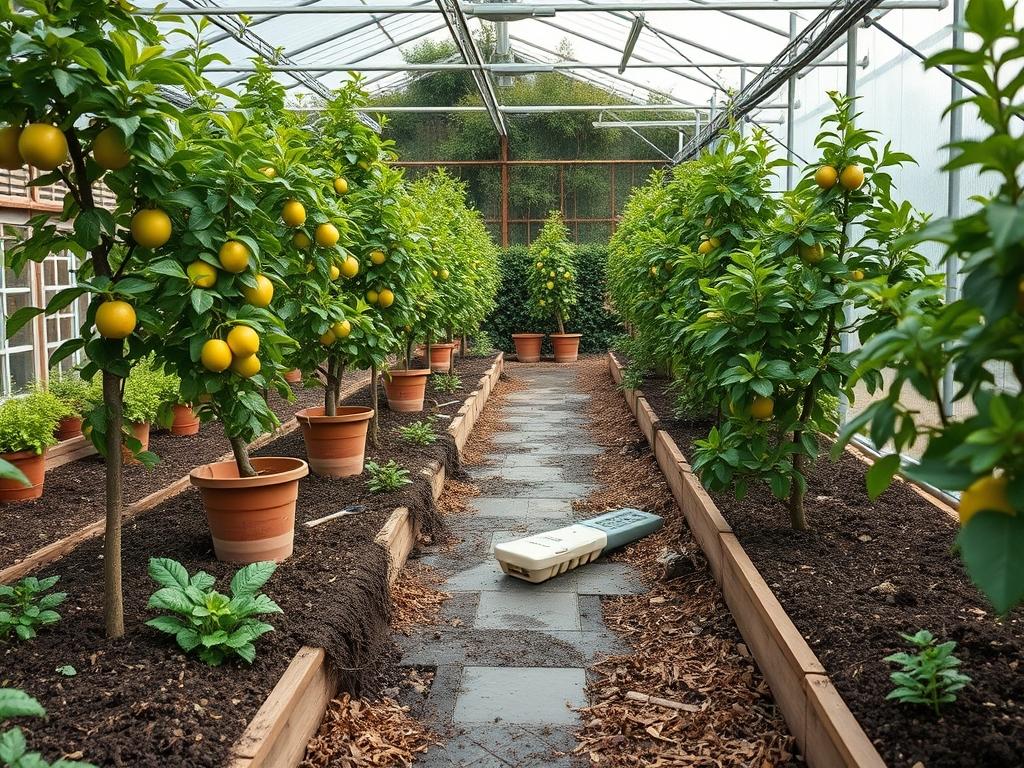
Transforming a standard residential lot into a productive and aesthetically pleasing environment requires a sophisticated understanding of spatial economy. Traditional orchards demand significant acreage, often leaving suburban homeowners with a choice between open lawn or a few scattered, overgrown specimens. Backyard Espalier Fruit Trees offer a structural solution to this dilemma, merging the disciplined lines of classical architecture with the seasonal dynamism of pomology. By training woody plants to grow in a two dimensional plane against a support system, we can maximize fruit production in narrow corridors, along property lines, or against the southern face of a masonry retaining wall. This technique does more than save space; it provides an intentional focal point that enhances the value of the home by demonstrating a high level of horticultural craftsmanship and care.
Climate considerations are paramount when selecting a site for these living installations. In many temperate regions, the microclimate created by a wall can extend the growing season, capturing radiant heat to protect blossoms from late spring frosts. From a landscape design perspective, these trees provide the vertical interest needed to break up the monotony of long fences or blank siding. They serve as green screens that do not encroach upon the footprint of outdoor living areas, such as patios or outdoor kitchens. By integrating these elements, we address the common landscaping challenge of creating privacy without sacrificing sunlight or usable square footage.
Landscape Design Principles
Successful integration of Backyard Espalier Fruit Trees relies on the core tenets of symmetry and axial alignment. When we design a landscape, we look for opportunities to create a sense of order. The formal patterns of an espalier, such as the Cordon, Palmette Verrier, or Belgian Fence, provide a geometric rigour that anchors the softer, more organic shapes of surrounding perennial beds. For instance, a series of T-Cordon Apple Trees can act as a low, living rail along a formal flagstone walkway, directing the eye toward a central water feature or seating area. This creates a clear hierarchy of space and reinforces the intentionality of the garden layout.
Elevation layers are another critical factor. Most suburban gardens suffer from a lack of mid level greenery; there is often a gap between ground cover and high canopy trees. Espalier systems fill this vertical void perfectly, typically maintained at heights of 5 feet to 8 feet. This elevation allows the architect to layer textures. We might place low growing Creeping Thyme or Native Sedum at the base, followed by the structured fruit tree, and perhaps a backdrop of taller evergreens in the distance. Furthermore, the irrigation planning for these trees should be integrated into the primary landscape zones. Subsurface drip irrigation lines with pressure compensating emitters ensure that water reaches the root ball efficiently without promoting fungal diseases on the foliage or the fruit itself.
Plant and Material Selection
Selecting the right species involves balancing the visual goals with the biological realities of the site. Not every tree is suited for the stresses of heavy pruning and tight training. The following table provides a selection of species commonly used in high end residential landscape projects.
| Plant Type | Sun Exposure | Soil Needs | Water Demand | Growth Speed | Maintenance Level |
| :— | :— | :— | :— | :— | :— |
| Honeycrisp Apple | Full Sun | Well-drained Loam | Moderate | Medium | High |
| Conference Pear | Full Sun / Part Shade | Deep Fertile Soil | High | Slow | Medium |
| Brown Turkey Fig | Full Sun | Sandy, Sharp Drainage | Low | Fast | Low |
| Santa Rosa Plum | Full Sun | Neutral pH Loam | Moderate | Medium | High |
| Meyer Lemon | Full Sun | Acidic, Well-drained | Moderate | Medium | Medium |
| Fuyu Persimmon | Full Sun | Adaptable | Low | Slow | Low |
Implementation Strategy
The process begins with a precise site grading plan. Before any trellis hardware is installed, the soil must be graded to ensure that water moves away from the foundation of the home or any adjacent retaining walls. Standing water is the primary enemy of fruit tree health, leading to root rot and poor fruit quality. Once the grade is established, we mark the positions for the support system. For a wood fence installation, we use 4-inch by 4-inch pressure treated posts set in concrete for structural integrity. Between these posts, we tension 14-gauge galvanized wire using stainless steel turnbuckles and eye bolts. The first wire is usually set 18 inches above the ground, with subsequent wires spaced 12 inches to 15 inches apart.
When the hardware is secure, we address the soil. We incorporate organic compost into the planting hole, which should be twice as wide as the root ball but no deeper. It is vital to keep the graft union at least 2 inches above the final soil line to prevent the scion from rooting. After planting, we apply a consistent 3-inch layer of hardwood mulch around the base, ensuring the mulch does not touch the trunk directly. This keeps soil temperatures stable and retains moisture. Finally, we install the trunk and primary branches to the wire using flexible rubber garden ties. These ties allow for the expansion of the wood as the tree grows, preventing the strangulation often caused by wire or traditional string.
Common Landscaping Failures
One of the most frequent errors in Backyard Espalier Fruit Trees management is the neglect of drainage dynamics. When trees are planted against a solid wall, the soil often suffers from compaction during the construction phase. Compacted soil lacks the oxygen necessary for root respiration, leading to stunted growth. To avoid this, we recommend mechanical aeration or the addition of expanded shale before planting. Another common failure is improper spacing of the drainage systems. If an irrigation system is set to a generic timer for the whole lawn, the espalier trees will likely be overwatered, as their needs differ significantly from turfgrass.
Root overcrowding also poses a risk, especially in narrow urban planters. Landscape architects must ensure there is enough subterranean volume for the root system to support the desired height of the tree. Without adequate space, the tree will become stressed, making it susceptible to pests like aphids or diseases such as powdery mildew. Furthermore, many homeowners fail to account for the thermal mass of masonry. A brick wall facing south can become incredibly hot in midsummer, potentially scorching the fruit and leaves if there is not at least a 4-inch air gap between the wall and the foliage.
Seasonal Maintenance
Landscape management is a year round commitment that changes with the cycles of the tree. During the spring, the focus is on nutrient delivery and initial growth. We apply a balanced, slow release fertilizer just as the buds begin to swell. This is also the time for corrective pruning to remove any wood damaged by winter storms. As we move into summer, maintenance shifts to “green pruning.” This involves pinching back new, soft growth that is moving away from the plane of the trellis. By removing this excess vegetation, we redirect the energy into fruit development and the strengthening of the primary spurs.
Autumn is reserved for harvest and sanitation. It is crucial to remove all fallen fruit and leaves from the base of the tree to prevent pests from overwintering in the mulch. We also check the tension of the galvanized wires, as the weight of the summer harvest can sometimes cause slight sagging. In winter, the tree enters dormancy, which is the ideal time for structural pruning. With the leaves gone, the skeleton of the tree is visible, allowing us to make strategic cuts with bypass loppers and hand shears. We aim to maintain the clean lines of the chosen pattern, ensuring that the silhouette remains sharp and architectural throughout the colder months.
Professional Landscaping FAQ
How much space do I need for an espalier tree?
You only need a strip of soil approximately 18 inches wide. The tree is trained vertically and horizontally, meaning it can thrive in narrow side yards or against fences where traditional trees would be too invasive for the walkway.
Can I grow Backyard Espalier Fruit Trees in containers?
Yes; however, you must use a large, well-draining pot and a sturdy trellis. Dwarf rootstocks are essential for container growth to ensure the root system stays manageable while the tree receives consistent water and nutrients.
Do espalier trees produce as much fruit as regular trees?
While they produce less total volume per tree due to their smaller size, the fruit quality is often higher. The open structure allows maximum sunlight and airflow to reach every branch, resulting in more even ripening and better sugar content.
Which fruit trees are easiest for beginners to espalier?
Apples and Pears are the most forgiving species. Their branches are flexible when young and they produce fruit on long lived spurs, which makes the permanent structural pruning much easier to manage over several decades compared to stone fruits.
Is special equipment required for the support system?
Basic installations require galvanized wire, eye bolts, and turnbuckles. For masonry walls, you will need a power drill and masonry bits to secure the hardware. Always use heavy-duty rubber ties to fasten the branches to avoid scarring the bark.