
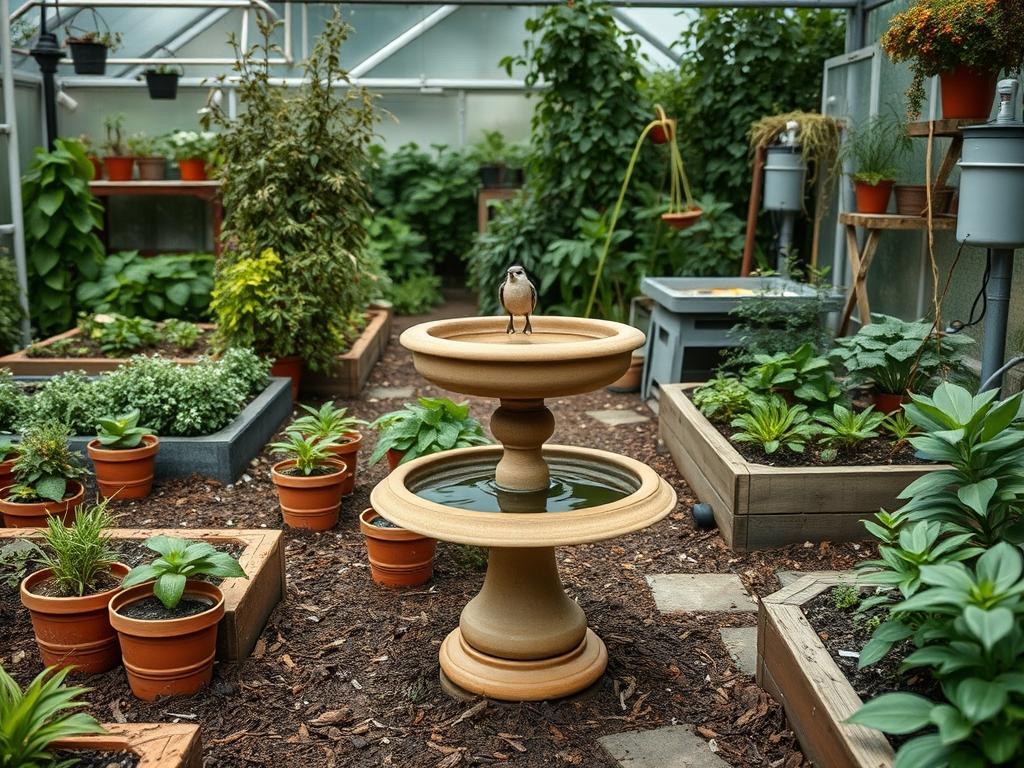
Integrating a water feature into a residential landscape offers an immediate elevation in sensory appeal; however, the ongoing success of such an installation depends entirely on the rigor of its maintenance. A bird bath is far more than a decorative basin. It is a functional component of a site’s irrigation and wildlife management plan. When a homeowner neglects Backyard Bird Bath Cleaning, the result is a rapid decline in the aesthetic and biological health of the garden. Stagnant, fouled water serves as a breeding ground for mosquitoes and harmful pathogens like salmonella or avian flu. From a landscape architecture perspective, a neglected water feature becomes a visual “sink” that draws the eye toward decay rather than beauty. Maintaining a pristine water source ensures that your outdoor investment remains a vibrant sanctuary. This involves understanding the interplay between site drainage, solar orientation, and the chemical composition of the materials used in the basin construction.
Landscape Design Principles
In professional site planning, the placement of a bird bath must follow the core principles of focal points and visual balance. By positioning a basin at the intersection of two primary sight lines, a designer creates a sense of purpose and destination within the yard. Symmetry often plays a role here. A stone pedestal centered within a parterre of Boxwood provides a formal structure that grounds the surrounding organic shapes. Conversely, in a more naturalistic meadow design, the water feature might be offset to create a sense of discovery.
Elevation layers are equally critical. A bird bath adds vertical interest to a flat floral bed, acting as a mid-tier element between low-lying groundcovers and high-canopy trees. This stratification is not merely for the viewer; it provides essential safety for birds, allowing them a clear line of sight to spot predators. We must also consider the proximity to Irrigation Hubs. Placing a water feature near an existing hose bib or automated drip line simplifies the refill process, which encouraged more frequent maintenance. Furthermore, the surrounding walkways should be constructed from non-slip materials like Flagstone or Decomposed Granite to ensure that the weekly task of cleaning remains safe and accessible regardless of the weather.
Plant and Material Selection
The following table outlines specific plant species and materials that complement a water-centric landscape design while considering the environmental impact of nearby water maintenance.
| Plant Type | Sun Exposure | Soil Needs | Water Demand | Growth Speed | Maintenance Level |
| :— | :— | :— | :— | :— | :— |
| Purple Coneflower | Full Sun | Well-Drained | Low | Moderate | Low |
| Little Bluestem | Full Sun | Poor to Average | Very Low | Moderate | Low |
| Creeping Thyme | Full Sun | Sandy/Rocky | Low | Fast | Low |
| Switchgrass | Full/Part Sun | Versatile | Moderate | Fast | Moderate |
| Oakleaf Hydrangea | Part Shade | Rich/Moist | Moderate | Moderate | Moderate |
| Blue Flag Iris | Full/Part Sun | Wet/Boggy | High | Moderate | Medium |
When selecting bird bath materials, the landscape architect must weigh the pros and cons of porosity. Cast Stone and Concrete are durable and offer a classic look, but they are porous and can trap algae in their microscopic crevices. Glazed Ceramic or Stainless Steel options provide a smoother surface that is far easier to wipe clean, though they may lack the weathered patina desired in traditional English gardens.
Implementation Strategy
The successful implementation of a garden plan involving a water feature starts with professional grading. The area beneath the bird bath must be perfectly level to prevent uneven water levels, which look sloppy and reduce the functional volume of the basin. We recommend creating a Leveling Base using three inches of Crushed Limestone or Paver Sand to prevent the pedestal from sinking or tilting over time due to soil expansion.
Edging provides the necessary definition between the water feature’s “splash zone” and the adjacent planting beds. Using a Steel Edger or a Cobblestone Border prevents Mulch from washing into the basin during heavy rains. To handle the overflow that naturally occurs during cleaning or rain, a small French Drain or a bed of Polished River Stone should be installed directly beneath the basin. This drainage strategy prevents the soil from becoming anaerobic and protects the root systems of nearby plants from rot. Finally, the application of a three inch layer of Hardwood Mulch around the perimeter helps retain soil moisture and suppresses weeds that might otherwise encroach on the focal point.
Common Landscaping Failures
One of the most frequent errors in garden planning is placing a water feature directly under a heavy-fruiting tree or a species known for significant leaf litter, such as a Black Walnut or London Plane Tree. The resulting organic debris accelerates the decomposition process in the water, necessitating daily Backyard Bird Bath Cleaning rather than weekly. This leads to homeowner burnout and eventual abandonment of the feature.
Another common failure involves improper irrigation planning. If a lawn sprinkler is positioned to hit the bird bath directly, it can introduce hard water minerals and lawn chemicals into the basin. This creates a stubborn Calcium Crust that is difficult to remove without harsh acids that might damage the masonry. Additionally, soil compaction in the high-traffic area around the bird bath often leads to poor drainage. When a homeowner stands in the same spot every few days to scrub the basin, the weight compresses the soil, killing the grass and creating a muddy pit. Designers should always include a designated Landing Pad made of durable stone to mitigate this compaction.
Seasonal Maintenance
Landscape management is a year-round commitment that shifts with the local climate. In the spring, the focus is on uncovering the feature and inspecting it for hairline cracks caused by the freeze-thaw cycle. This is the ideal time to apply a Masonry Sealer to porous stone surfaces to make summer algae removal easier. During the peak of summer, high temperatures and intense UV exposure speed up biological growth. Homeowners should use a stiff Nylon Scrub Brush and a solution of one part White Vinegar to nine parts water to sanitize the basin every two to three days.
As autumn arrives, falling leaves become the primary challenge. Installing a fine Bird Bath Mesh can help catch debris, but the most effective strategy is a complete scrub-down before the first hard frost. In colder regions, the winter landscape plan requires the removal of the basin entirely or the installation of a Submersible De-icer. If a concrete basin is left full of water in sub-freezing temperatures, the expanding ice will inevitably crack the substrate, leading to a total loss of the feature. Storing the basin in a garage or covering it with a waterproof Canvas Tarp is the best way to safeguard the architectural integrity of the piece.
Professional Landscaping FAQ
How often is Backyard Bird Bath Cleaning actually necessary?
In most climates, you should refresh the water daily and perform a deep scrub every two to three days. This prevents the accumulation of biofilm and interrupts the life cycle of mosquitoes, which can hatch in as little as 48 hours.
What is the safest way to clean a stone bird bath?
Avoid using bleach or harsh detergents which can linger in the stone’s pores and harm birds. Instead, use a solution of White Vinegar and water. For stubborn algae, a paste made of Baking Soda provides a safe, mild abrasive.
Where is the best place to position a bird bath for health and safety?
Place the feature in a location that receives afternoon shade to keep water temperatures low. It should be roughly ten feet away from dense shrubs where predators might hide, but close enough to a Native Tree for a quick escape.
How do I prevent algae from growing in the first place?
Maintain constant water movement by adding a Solar Fountain or a Water Wiggler. Algae thrives in still, sun-heated water. Keeping the basin in a shaded spot and adding fresh water daily are the most effective non-chemical preventative measures.
Can I use a pressure washer to clean my water feature?
Use caution with a Pressure Washer on cast stone or aged concrete. While effective at removing grime, high-pressure streams can etch the surface and widen existing micro-cracks. A low-pressure setting and a wide-fan nozzle are generally safer for delicate landscape ornaments.