
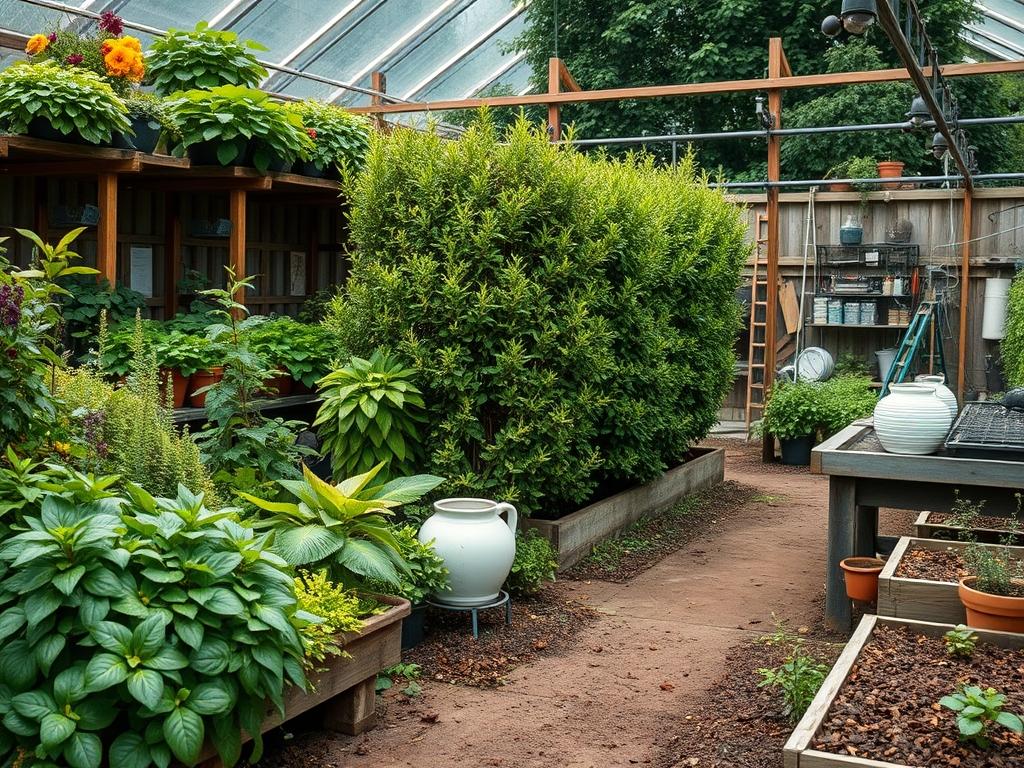
Designing a high end landscape requires more than just a selection of aesthetically pleasing flora; it demands a deep understanding of structural integrity, seasonal transitions, and the architectural potential of living materials. Among the most versatile and prestigious choices for establishing vertical boundaries is the European Hornbeam, scientifically known as Carpinus betulus. Unlike casual screening options that can appear unruly or succumb to heavy snow loads, a well executed Hornbeam privacy hedge provides a dense, impenetrable screen that mimics the crisp lines of masonry. This species is particularly favored by landscape architects for its marcescence, a botanical trait where the tree retains its dried, copper colored foliage through the winter months. This characteristic ensures that privacy is maintained year round, while adding a unique textural element to the dormant garden. Achieving professional results with Hornbeam Privacy Hedge Styling requires a meticulous approach to site preparation, precise planting geometry, and a commitment to long term maintenance schedules that prioritize both the health of the tree and the geometry of the design.
Landscape Design Principles
The success of a formal hedge lies in its adherence to classical design principles, specifically symmetry and proportion. When planning the layout, the hedge must be treated as a structural wall. This involves establishing clear axes and focal points that guide the eye through the outdoor space. For a formal aesthetic, the use of string lines and laser levels is non negotiable during the initial layout phase. Architectural hedges often serve as the backdrop for “outdoor rooms,” where the green wall defines the perimeter of a terrace or a secluded dining area.
Elevation plays a critical role in how the hedge is perceived. If the site has a natural slope, the landscape architect must decide between a “stepped” top, where the hedge height remains consistent relative to the ground, or a “level” top, which requires the hedge to be taller at the lower end of the slope to maintain a perfectly horizontal line. This choice significantly impacts the visual balance of the property. Additionally, the integration of walkways should be planned with a minimum 4-foot clearance from the hedge centerline to account for future growth and access for maintenance equipment. Visual balance is further enhanced by layering; placing lower tier plants like Buxus microphylla or Lavandula in front of the Hornbeam wall creates depth and softens the transition from the vertical screen to the horizontal plane of the lawn or hardscape.
Plant and Material Selection
Selecting the correct cultivar and supporting materials is the foundation of a durable landscape. While the standard species is excellent for large boundaries, specific cultivars offer different growth habits suited for varied spatial constraints.
| Plant Type | Sun Exposure | Soil Needs | Water Demand | Growth Speed | Maintenance Level |
| :— | :— | :— | :— | :— | :— |
| Carpinus betulus | Full Sun to Part Shade | Well drained loam | Moderate | Medium | High (for formal) |
| Carpinus betulus ‘Fastigiata’ | Full Sun | Tolerant of clay | Moderate | Moderate | Medium |
| Carpinus betulus ‘Frans Fontaine’ | Full Sun | Rich, moist soil | Moderate | Slow to Medium | Low to Medium |
| Fagus sylvatica (Alternative) | Full Sun | Chalky or sandy | Low to Moderate | Slow | High |
| Taxus x media (Base Layer) | Shade to Sun | Excellent drainage | Moderate | Slow | Medium |
In addition to the plants, the choice of mulch and irrigation components is vital. A 3-inch layer of double-shredded hardwood mulch is recommended to suppress weeds and retain moisture. For irrigation, a direct-to-root drip system with 0.9 GPH emitters spaced every 12 inches ensures deep hydration without the evaporative loss associated with overhead sprayers.
Implementation Strategy
The implementation phase begins with professional grading to ensure that water moves away from the root zone. A common mistake is planting in a “V” shaped trench; instead, a rectangular trench should be excavated, measuring at least twice the width of the root ball but no deeper than the height of the root mass. This encourages lateral root expansion into the surrounding native soil. Before placing the trees, the bottom of the trench should be scarified to prevent “potting” where roots cannot penetrate compacted subsoil.
Spacing is the most critical technical decision. For a dense, formal hedge, specimens should be spaced 2.5 to 3 feet apart on center. If using the “pleached” method, where the canopy is trained on a high frame, the spacing may increase to 4 or 5 feet. Once the trees are positioned, backfill with a mix of native soil and well rotted organic compost. Avoid excessive nitrogen fertilizers during the first year; instead, use a root stimulant or phosphorus rich bone meal to encourage establishment. After backfilling, the soil should be firmly tamped to remove air pockets, followed by a thorough saturating soak. Finally, install a powder coated steel edging or a natural stone border to define the bed and prevent turf encroachment.
Common Landscaping Failures
The most frequent failure in Hornbeam hedging is improper drainage. While Hornbeams are resilient, they cannot survive in “bathtub” conditions where water sits stagnant around the roots for extended periods. If the site has heavy clay, a French drain or a perforated 4-inch PVC pipe embedded in gravel must be installed parallel to the hedge line to divert excess moisture.
Another significant error is soil compaction. Heavy machinery used during construction can compress the soil pores, suffocating the roots. If compaction is suspected, core aeration or the use of an air spade to incorporate organic matter is necessary before planting. Furthermore, many homeowners fail to account for the “taper” of the hedge. A professional hedge should be pruned so the base is slightly wider than the top. This allows sunlight to reach the lower branches, preventing the common “leggy” look where the bottom of the hedge loses its foliage and creates gaps in the privacy screen.
Seasonal Maintenance
Maintaining a formal Hornbeam hedge requires a disciplined seasonal approach. In early spring, before the buds break, an application of slow release 10-10-10 fertilizer should be applied to the base of the plants. This is also the time to inspect the structural integrity of any bamboo canes or wire systems used for training.
Summer is the primary period for shaping. To maintain a crisp, formal look, the first pruning should occur in late June or early July once the first flush of growth has hardened. Use precision hedge shears or high quality electric trimmers to maintain the geometric profile. A second, lighter pruning in late August will tidy up the secondary growth and ensure the hedge looks sharp throughout the autumn and winter.
In autumn, the focus shifts to hydration and soil health. Continue watering until the ground freezes, as the retained leaves can still transpire moisture. Refresh the 3-inch mulch layer to protect the root zone from temperature fluctuations. During winter, the main task is monitoring for mechanical damage. Heavy snow should be gently brushed off the top of the hedge using a soft broom to prevent branch breakage. Unlike many evergreens, Hornbeams are highly resistant to “winter burn,” but a late winter inspection is a good time to identify any dead or crossing branches that should be removed using bypass pruners.
Professional Landscaping FAQ
How many years does it take for a Hornbeam hedge to fill in?
When planted at 3-foot intervals, a hedge typically achieves full density within 3 to 5 years. Growth rates vary based on soil quality, but you can expect 12 to 18 inches of vertical growth annually during the establishment phase.
Can European Hornbeam handle heavy clay soils in urban environments?
Yes, Carpinus betulus is exceptionally tolerant of urban conditions, including compacted clay and moderate pollution. However, the site must be graded appropriately to prevent standing water, which remains the primary threat to the health of the root system.
What tools are best for achieving a perfectly flat hedge top?
Professional architects utilize telescopic hedge trimmers and a string line anchored by steel rebar at both ends. For large scale projects, a laser level provides an exact horizontal reference point to ensure the top line is mathematically true.
Do I need to fertilize my Hornbeam hedge every year?
Annual fertilization is recommended for young hedges to encourage canopy closure. Once the hedge reaches its desired height and density, reduce fertilization to every 2 to 3 years to minimize excessive pruning labor while maintaining foliage color.
Why is my Hornbeam hedge losing its lower leaves?
This is usually caused by improper pruning geometry. If the top of the hedge is wider than the bottom, it shades the lower branches. Ensure the hedge is pruned with a slight inward taper toward the top to allow sunlight penetration.